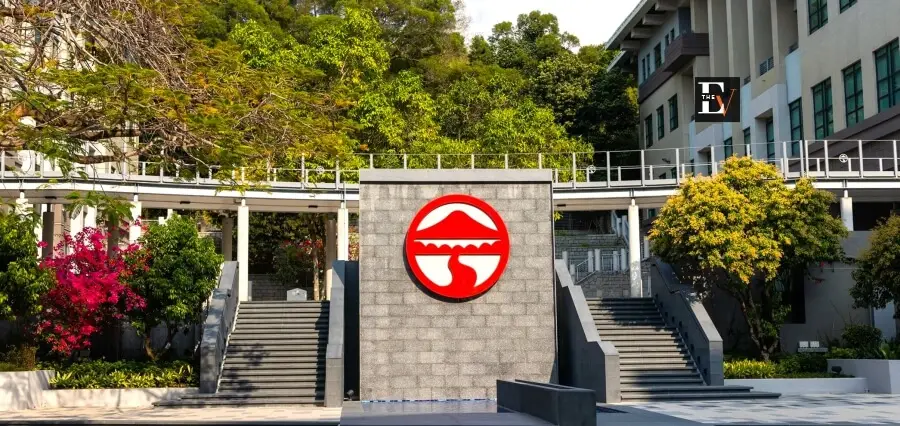
Very few organizations have the ability to boast of a heritage dating back to the late nineteenth century but, at the same time, claim that they are at the cutting edge of AI research. Lingnan University is one such organization. Originally founded in Guangzhou in 1888, the university operate over 60 years in the Chinese Mainland until it ceased to operate in 1952. The institution was re-established in Hong Kong in 1967 and developed into a unique liberal arts university in the city. In July 2023, since the appointment of Prof S. Joe Qin as President and Wai Kee Kau Chair Professor of Data Science, the university is entering a new era, which combines an old liberal arts heritage and a bold move towards AI and data science.
Building an Interdisciplinary Research Base
To drive this transformation, President Qin led the establishment of the School of Data Science (SDS) and the Lingnan University Institute for Advanced Study (LUIAS) in 2024. The School of Data Science offers an integrated approach in its curriculum through combining technical skills with the use of cases, ethics, and strategic thinking in order to develop a generation that will help transform Hong Kong into a knowledge-based society. On the other hand, LUIAS runs under the honorary directorship of Prof Samuel C. C. Ting who is a Nobel Laureate in Physics, and has already recruited 26 academics from nine countries and regions in the past two years as of August 2026.
“We are not simply adding technology courses to a liberal arts curriculum,” President Qin says. “We are rebuilding the university around the idea that liberal arts and technology strengthen each other, and that our students should be literate in both.”
Elite Talent for Undergraduates
This approach is also reflected in the admissions policy. From the 2026/27 school year onwards, the Samuel C. C. Ting Elite Class was set up at Lingnan University, which bears the name of the Nobel laureate, and whose aim is to choose the best undergraduate students in order to educate them in a specially designed programme. The participants of the class are provided with four years’ full tuition fee scholarships, fully funded dormitory places, access to the most advanced research programmes, and artificial intelligence education from the world-class companies leading to professional certification.
Global Reach and Talent Recruitment
Lingnan has also widened its international footprint well beyond the classroom. The university now maintains exchange partnerships with more than 280 institutions across over 50 countries and regions, giving undergraduates a broad menu of options for overseas study. That global orientation feeds into a larger recruitment drive: as Lingnan approaches the 60th anniversary of its re-establishment in Hong Kong in 2027, it has launched the “Lingnan-60 Global Talent Recruitment” initiative, which aims to bring in more than 60 internationally recognised scholars working in fields such as AI, machine learning, industrial data science, evolutionary computation, advanced materials and carbon neutrality. By the end of August 2026, the university had already recruited approximately 40 scholars through the scheme, including fellows of prestigious national academies.
“Talent is the foundation of everything we are trying to build,” President Qin says. “Every scholar we bring to Lingnan expands what our students and our existing faculty can achieve together, and that compounding effect is exactly what the Lingnan-60 initiative is designed to create.”
Research Output and Infrastructure
The recruitment push is already showing up in independent measures of research output. More than 20 percent of Lingnan’s professors now rank among the World’s Top 2% Scientists list compiled by Stanford University, and three Lingnan scholars were named Highly Cited Researchers 2025 by Clarivate, the global analytics firm that tracks academic influence. To support that expanding research agenda, the university opened its first High-Performance Computing Data Centre, named HPC NexT, in February 2025. The centre delivers more than 6,000 TFLOPS of processing power and has cut some AI-driven research computation times from months to hours, giving researchers the capacity to pursue more ambitious projects in AI and data science. The second phase has introduced Hong Kong’s first high-efficiency, energy-saving spray cooling system, which further increases its computing performance and energy efficiency.
AI in the Classroom
Digital tools have also moved into everyday teaching. Lingnan counts itself among the first universities worldwide to make AI tools available to all faculty, staff and students, and President Qin introduced Generative AI as a compulsory course for every first-year undergraduate beginning in the 2024/25 academic year. The university frames the requirement as a way of pairing technical competence with ethical reasoning, rather than treating AI literacy as an optional add-on. That same emphasis on service and real-world application runs through Lingnan’s motto, “Education for Service,” which the university applies through Service-Learning projects that send students into the community to research and address social issues through interdisciplinary teams.
Rising in Global Rankings
The combined effect of these initiatives is beginning to register in global rankings. Lingnan retained its world No. 1 position for UN Sustainable Development Goal 4, Quality Education, in the Times Higher Education Sustainability Impact Ratings 2026, while climbing into the global top 100 overall at 63rd place, ranking first in Hong Kong across six SDGs and placing in the global top 100 for seven. In the newly released QS World University Rankings 2027, Lingnan rose more than 120 places to reach 581st globally, its largest single-year rise in recent years. The ShanghaiRanking’s 2026 Academic Ranking of World Universities recorded a similarly sharp jump, with Lingnan advancing 300 places from the 901st-1,000th band into the 601st-700th global band, the largest advance among Hong Kong’s eight government-funded universities and moving to joint sixth place within the city. Lingnan has achieved outstanding results in the 2026 ShanghaiRanking’s Global Ranking of Academic Subjects (GRAS), with eight subjects on the list, nearly three times as many as last year. Five subjects, including Computer Science and Engineering, and Electrical and Electronic Engineering, made the list for the first time, and Artificial Intelligence, which made its debut on the list last year, saw a significant leap in its ranking, breaking into the global top 100 for the first time in the 76th to 100th band. Lingnan also entered the Times Higher Education Asia University Rankings for the first time this year, debuting at 84th and breaking into Asia’s top 100 universities on its first attempt.
“Rankings are not the goal in themselves, but they are a useful external check on whether our strategy is working,” President Qin says. “When we see this kind of movement across several different ranking systems at once, it tells us the investment we have made in research, in talent and in our students is translating into results the wider academic community recognises.”
Recognition Through Invention
Lingnan’s research teams have also converted that momentum into recognised inventions. At the Silicon Valley International Invention Festival 2026, all 14 of the university’s entered projects won awards, for a total of 16, including eight gold and six silver medals, making Lingnan the Hong Kong institution with the highest number of awards and gold medals at the festival. One of those projects, GaitGPT, an evidence-grounded AI system for bidirectional clinical gait translation developed by a team under President Qin, separately received the IFIA Best Invention Award from the International Federation of Inventors’ Associations and the Thailand Award for the Best International Invention and Innovation from Thailand’s National Research Council. The remaining award-winning projects covered energy and environmental protection, medicine, data privacy protection, blockchain, AIoT technology, education and game creation, reflecting the breadth of the university’s “Liberal Arts + Technology” and “AI+” priorities.
From Lab to Market: LU Xcelerator
To move that research beyond the laboratory, Lingnan established LU Xcelerator, an innovation and entrepreneurship platform built around “AI + X” and the application of agentic AI across industries. The platform draws on the university’s proximity to the Northern Metropolis, Hong Kong’s strategic innovation and technology corridor bordering Shenzhen, to connect government, industry, academic, research and investment partners across Hong Kong, Macao and the nine Mainland cities of the Greater Bay Area. Under the framework of China’s 15th Five-Year Plan, the university positions LU Xcelerator as a bridge linking international enterprises entering Mainland markets with domestic firms seeking to expand overseas, while supporting start-up incubation, joint investment matching and the faster commercialisation of academic research.
Looking Ahead
Lingnan sees these initiatives as part of the initial phases of the long-term plan and not as a complete transformation. Lingnan plans to maintain the progress of the university in engineering and technological and multidisciplinary research and will continue to improve its scholarships and talent development programs in order to allow every student to find his or her way in the institution. As the Lingnan University approaches its 60th anniversary in Hong Kong in 2027, Lingnan considers the rise in international ranking, research, and scholars as a means for indicating that the university’s liberal arts and technology model has started to bear fruit.