Building a Future Shaped by Shared Intelligence
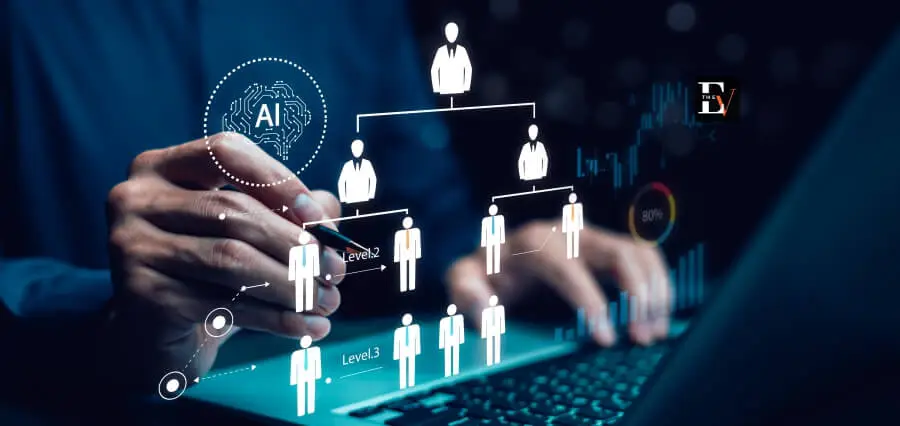
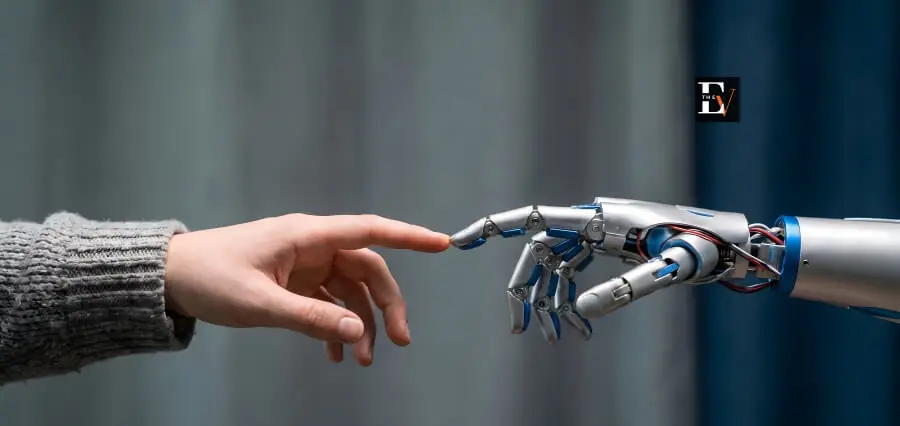
The age of artificial intelligence has left behind the research lab. It writes reports, analyzes medical images, classifies legal documents, and designs products; and it does so in tandem with human beings and not in replacement of them. Human-AI Collaboration is the tale of this decade at the workplace, and the business leaders, scientists, and educators are figuring out the best way to share labor between human intuition and machine efficiency.
Complementary Strengths
The machine and man contribute distinct talents. An algorithm is capable of analyzing millions of entries in a few seconds and identifying statistical trends, whereas a person provides context, imagination, ethics, and responsibility. In Successful Human-AI Teamwork, roles are assigned based on strengths. For instance, an algorithm is able to find out-of-the-ordinary clauses among thousands of contracts, while a lawyer will determine which clauses pose a danger to the client.
A Real-World Case: Protein Science
Biology provides a concrete, verifiable example. For years, scientists have tried to predict the three-dimensional structure of a protein based on its sequence of amino acids, a process termed as the protein folding problem. AlphaFold 2 system developed by DeepMind made predictions in 2020 that were considered as good as laboratory methods by the CASP14 assessment organizers for many targets. In 2021, DeepMind and the European Bioinformatics Institute launched a public database of the predicted structures which soon included more than 200 million proteins. Other scientists around the world used these predictions to inform their experiments without replacing them. Half of the Chemistry Nobel was awarded to Demis Hassabis and John Jumper of DeepMind for protein structure prediction, and the other half was awarded to David Baker for computational protein design in 2024. The story is an illustration of Human-AI Collaboration and how they achieved what each of them could not achieve alone.
Changing the Daily Job
In the office, the shift is perhaps less pronounced but involves a larger number of people. Instead of summarizing a lengthy document themselves, analysts now ask their AI assistants to summarize for them. Programmers now incorporate recommended code into their work, testing and correcting where necessary. Customer service agents allow software to compose responses, which they then edit prior to sending. People who make efficient use of such technology are now able to allocate more of their time to analysis and relationship building rather than to drafting. The shift in question also has an impact on the evaluation of performance because the quality of output is valued over its quantity.
Trust and Oversight
Trust decides if the collaboration succeeds. AI algorithms can make erroneous conclusions, harbor bias that exists within their training data, and also fail when faced with novel scenarios. Organizations thus ensure that there is always an individual overseeing the decision-making process, especially in the realms of medicine, hiring, lending, and criminal justice. Legislatures are making the same case. There is also the benefit of transparency, where if there is an explanation on what factors led to the decision, users can dispute them.
Skills for the Partnership
For one, workers must possess certain new skills for participating in this collaboration. Workers must acquire the ability to write instructions that will make sense, as well as the habit of asking about the veracity of the output and questioning them before acting on them. There is currently an emphasis on teaching humans skills that computers cannot easily emulate such as empathy, negotiation and management. Organizations that invest in training workers from the outset diminish fears and hasten adaptation.
Risks and Open Questions
However, some open questions persist. Economists do not agree on the number of jobs AI will destroy and those it will create. Privacy advocates fear the use of workplace AI in the monitoring of people’s actions. Small organizations doubt their ability to acquire the technologies and knowledge required. The policymakers have to take care of all these matters but at the same time not stop the progress.
The Way Ahead
In the next phase, there will be AI agents that do multi-step tasks like planning and researching in fewer prompts. This will further accentuate the specialization and make oversight more necessary. Governments, trade unions, and professional associations will have to reach an agreement on the criteria of responsibility since a partnership without responsibility is doomed to damage. It is those organizations that will succeed that will lay down the rules, assess performance objectively, and hold people responsible for results. Machines will continue to become faster, yet purpose, judgment, and responsibility are still exclusively human activities. The partnership has just begun, and it is those who know its rules that will prevail.