No area in South Africa requires more tenacity, ingenuity, and passion than special needs education. In areas where there are fewer resources and knowledge about intellectual disabilities is not widespread, institutions which have managed to develop a sustainable program deserve praise. It is this sort of institutions which the current list of the 30 Best Education Institutes to Study In will seek to celebrate.
For this year, the focus shifts to KwaZulu-Natal where Thuthukani Special School & Resource Centre has dedicated over forty years to transforming special needs education in South Africa. This one-room schoolhouse which started off as a haven for four children has blossomed to become a center of excellence that accommodates over 450 students and has been cited by the National Department of Education as a national model for inclusive schooling.
Origins: A Home Turned Sanctuary
The history of the institution begins in 1981, when Zululand Mental Health Director Joanna James learned from social workers about the plight of intellectually disabled Zulu children in the community being treated poorly because of a lack of knowledge regarding such problems. As a result of her action, James created a safe place for those kids, taking four of them into her house. This simple but kind deed led to the creation of an institution which would change the whole field of special education in the area.
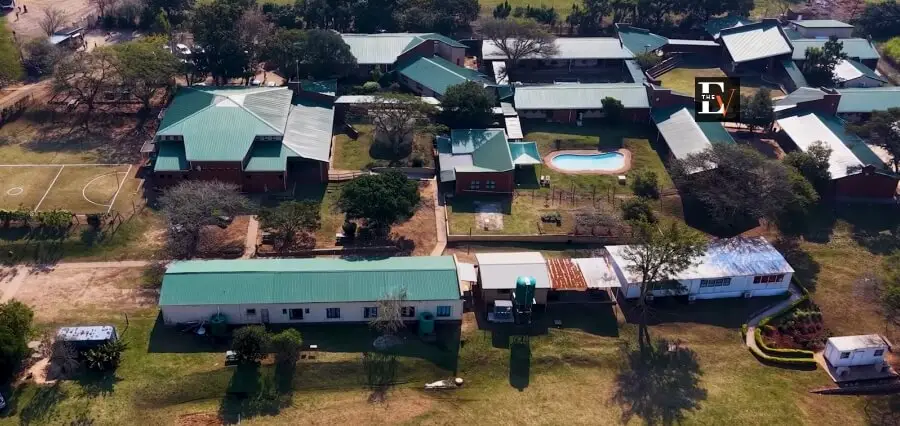
Crowded classrooms necessitated an early move. The infantile institution moved from James’s own residence to another one which was rented in Empangeni until a proper plot of land in Dover Farm could be acquired in 1990 where construction of a purpose-built campus was initiated. However, the change did not limit itself only to physical infrastructure. When a school nearby was facing closure, the school grabbed this chance and merged with that, thus making it the first integrated school for intellectually disabled children in South Africa and breaking away from segregation which marked special schools before. Eventually, the number of students increased from four to 450, and along with that, there was an increase in the objectives of institution.
Growth and Milestones
That growth has produced a long list of milestones. The National Department of Education chose Thuthukani as one of only six schools in South Africa to pilot the Resource Centre model, positioning it at the forefront of inclusive education nationwide. Its own therapists have authored specialized curricula built specifically for learners with intellectual disabilities, work that has established the school as a genuine trailblazer in the field. Every year of its existence, the institution has earned a clean financial audit, a record that underpins its reputation for transparency and integrity. On campus, staff have championed play-based and project-based learning, functional skills development, and an on-site sheltered employment facility that bridges the gap between school and work. Thriving sports and arts programs have given neurodiverse learners a stage to shine locally, nationally, and internationally, while thirteen core community values, among them respect, self-love, kindness, and resilience, anchor daily life for staff and students alike. Therapists, teachers, and parents operate under a single, synchronized model of care, working in goal-directed harmony toward each child’s potential, and the school has continued to run community campaigns that push back against the stigma surrounding intellectual disability.
Beyond the headline milestones, the philosophy behind school’s growth has remained remarkably consistent. Administrators describe the shift from a “basic safe haven” to a full-scale institution as more than an expansion in numbers; it reflects a deliberate broadening of purpose, from simply sheltering vulnerable children to actively equipping them for independent, participatory lives. That shift shows up in the classroom, on the sports field, and in the workshop, where the on-site sheltered employment facility gives school leavers hands-on experience that carries directly into the working world. It also shows up in the school’s insistence on measuring itself by outcomes rather than intentions, a standard reflected in its unbroken run of clean annual audits and its willingness to be evaluated as a pilot site for national policy.
A Culture Led by Values
Leadership sits at the center of that culture, and the school’s leadership team is direct about what drives it. “When leadership creates an environment where every individual feels truly seen, valued, and celebrated, routine compliance transforms into heartfelt commitment,” the leadership explained. “Mutual respect replaces institutional inertia.” That philosophy, they added, gives staff room to experiment, propose their own solutions, and find fresh, real-world ways to bring out the best in every learner.
Facing the Challenges Head-On
Running a non-profit special-needs school in rural South Africa still carries real strain. State subsidies cover only half of Thuthukani’s operational costs, leaving donors, child-sponsorship programs, and corporate partners to close the remaining gap. Staffing presents a parallel challenge: funding constraints limit how many permanent support staff the school can employ, even as demand for individual attention keeps rising. Rather than treat the shortfall as a dead end, administrators built a structured volunteer program that trains newcomers in special-needs care while simultaneously expanding the team’s capacity to support learners. “As a non-profit, keeping our life-changing programs alive is a continuous effort,” the leadership said, describing the funding gap as a constant pressure.
Adapting to a Changing World
Technology adoption follows the same pragmatic logic. Power outages and unreliable networks are facts of life in the school’s rural setting, so administrators favor low-cost, durable tools suited to that environment over flashier alternatives. The school has begun using artificial intelligence to evaluate emerging educational trends before rolling them out to classrooms, and a dedicated social media team manages the school’s digital presence and search visibility, work that connects Thuthukani with global partners and donors who help sustain its existence and growth.
What Sets Thuthukani Apart
Ask what separates Thuthukani from other special-needs institutions, and the answer starts with conviction rather than infrastructure. Every staff member shares the belief that a child’s well-being and education must guide every decision the school makes. Each student receives an Individual Support Plan tailored to their holistic development, a system designed to ensure no learner falls through the cracks. That personal commitment is paired with globally recognized techniques, including music, movement, art, and play, alongside vocational training intended to prepare graduates for genuine participation in society after they leave the classroom.
A Year of Recognition
Recognition has followed, and it has arrived across nearly every corner of school life rather than in a single discipline. Over the past year alone, the school’s principal won first place for Excellence in Special Needs Leadership at the National Teaching Awards. The school choir placed second nationally at the South African Choral Eisteddfod, and the swimming team earned a nomination for Best School Sport Team at the KZN Sport Awards. The drama group secured second place overall in the Provincial Drama Competition, and one learner was selected to represent South Africa at the Special Olympics on the global stage in 2027. Taken together, the honors span leadership, music, sport, and drama, evidence that the school’s commitment to holistic development extends well past the core curriculum and into every space where a learner might discover a talent worth celebrating.
Advice for the Next Generation of Institutions
For institutions hoping to follow a similar path, Thuthukani’s leadership offers a clear set of priorities rather than a step-by-step formula. “Don’t wait for systemic changes; build strong, active support networks within your local community,” the leadership advised, framing local partnerships as more reliable than waiting on broader policy reform. They urged emerging schools to invest deeply in their people, arguing that an institution is only as strong as the team behind it, and to keep the learner at the center of every decision. “Measure every decision against the best interests of the child,” the leadership said. “When you keep these principles as your anchor, true excellence will follow.”
Looking Ahead: Living Up to “Progress”
Looking ahead, the school describes itself as a sanctuary of belonging where every child’s right to a quality education is upheld, and its ambitions now extend beyond its own gates. Administrators plan to position the campus as a practical training hub for prospective educators, working in partnership with local universities to widen the pool of teachers equipped to work with neurodiverse learners. The name itself carries that forward-looking intent: Thuthukani is the Zulu word for Progress, and the school intends to keep living up to it by driving inclusion, pushing boundaries, and advocating for neurodiverse learners well beyond its own community.
From a single room in Joanna James’s home to a 450-learner campus recognized as a national pilot site, Thuthukani Special School & Resource Centre has built its reputation on a simple premise: that every child, regardless of ability, deserves an education built around their potential. That premise, and four decades of work to make it real, is why the school earns its place on this year’s list of the 30 Best Education Institutes to Study In.