It is uncommon for an institution to be able to combine the above aspects in one cohesive process, let alone do so for close to three decades in a manner that results in a community of several hundred individuals from a mere handful of students who are all a product of the same vision. It is the above accomplishment which has ensured that one North American educational institution earns its position among the continent’s best schools.
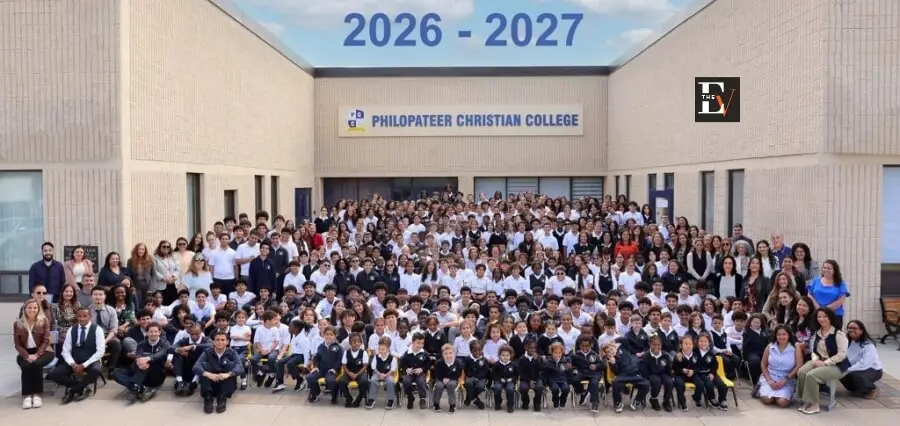
Philopateer Christian College, commonly referred to as PCC, is presently a reputable Pre-JK to Grade 12 school that caters to over 400 pupils and about 60 employees. The college, which was established in 1999 by members of the Coptic Egyptian community, enjoys the pride of being the first privately owned school in North America for the Coptic Egyptians. Phoebe A. Wasfy currently heads the college as the School Principal.
A Vision Rooted in Purpose
The original vision behind PCC’s creation is still upheld many years after its inception. PCC’s founders believed young people deserved an education covering more than academic issues. This founding idea of educating and empowering students spiritually, academically, physically, and socially has not changed, even as the school continues to grow.
The institution has moved beyond the confines of the ordinary classroom, connecting students to other institutions, professions, foreign lands, community services, and leadership opportunities. PCC does not seek only to create competent graduates, but graduates who can make a positive impact in their environments.
Milestones that Defined a journey
Several achievements have marked important milestones in PCC’s history. The launch of the high school in 2007 enabled students to complete their education at PCC through to graduation, ensuring a seamless experience rather than an interrupted one. Two years later, relocation to the Mississauga Road campus laid the groundwork for continued development.
Academic success has been equally critical. The college has achieved a 100 percent university admission rate for its graduates, who have been accepted to reputable universities in Canada, the USA, the UK, Egypt, and elsewhere. International student programs, bilingual and extended French programs, a virtual OSSD campus, and PMI Project Management Ready certification have all strengthened PCC’s academic portfolio. From September 2026, the AP and Pre-AP program will be introduced school-wide.
International partnerships have also shaped the institution’s trajectory. PCC has signed memoranda of understanding with St. George’s University, Massachusetts College of Pharmacy and Health Sciences, The British University in Egypt, European Universities in Egypt, and Galala University, providing scholarships, mentorship, workshops, and pathways into fields such as medicine, pharmacy, and health sciences.
Leadership Grounded in Service
Principal Wasfy’s leadership philosophy centres on servant leadership, purposeful innovation, and accountability. She believes leadership must be measured by the people it develops and the opportunities it creates, rather than by title or position.
“Leadership is not merely a position; it is the responsibility to recognize potential, build capacity, and create conditions in which others can thrive.”
This conviction has shaped PCC’s culture in lasting ways. Teachers are encouraged to become reflective practitioners, students to take ownership of their learning, and families are welcomed as active partners. Faith and excellence are treated not as competing priorities but as complementary forces reinforcing one another.
Navigating Challenge with Resilience
Like any growing institution, PCC has faced obstacles. Expanding enrolment, programs, and structure has required the college to preserve its close-knit culture while adapting to new systems. The COVID-19 pandemic tested the college severely, forcing a rapid shift between in-person and virtual learning while protecting academic continuity and community connection. Staff flexibility during this period accelerated the institution’s ability to integrate technology thoughtfully.
The college has also had to respond to shifting educational expectations, staffing pressures, student mental-health concerns, and the growing influence of artificial intelligence. Its response has been anchored in transparent communication, professional development, careful policy design, and collaborative leadership.
“Resilience does not mean resisting change; it means remaining faithful to our purpose while finding better ways to fulfil it.”
Staying Ahead of a Changing Landscape
PCC’s approach to innovation is deliberate rather than reactive; new technologies are adopted only after consideration of whether they genuinely improve learning or better prepare students for the future. The virtual OSSD campus has expanded access to Ontario secondary education, while the PMI Project Management Ready program introduces students to planning, collaboration, and professional practice. The forthcoming AP and Pre-AP initiative will add further academic rigour.
Artificial intelligence is a particular focus of the institution’s planning. PCC is developing clear expectations around its use, insisting students engage with AI ethically and responsibly. Professional development helps teachers integrate emerging tools while preserving academic integrity and human interaction. The college maintains close ties with universities and industry professionals to ensure innovation remains grounded in sound pedagogy.
A Distinctive Approach to Student Development
What distinguishes PCC most clearly is its refusal to separate academic achievement from character formation. Students are challenged intellectually while being taught to lead with integrity, empathy, humility, and responsibility. The college’s small community allows educators to know students individually, recognizing their strengths, needs, and ambitions.
Students are offered opportunities across leadership, athletics, the arts, public speaking, international travel, and community service. Programs such as the Good Samaritan initiative encourage service to others, while theatrical productions, athletic teams, Model United Nations, and university partnerships give students avenues to develop their gifts. Clinical learning opportunities and professional certifications connect classroom knowledge to future careers.
“Success is not defined only by grades. It is reflected in a student’s ability to think critically, communicate confidently, persevere through difficulty, serve compassionately, and use knowledge for a greater purpose.”
Recognition That Reflects Community Trust
PCC’s excellence has been affirmed through consistent recognition. The college was voted Mississauga’s Best Private School through the Readers’ Choice Awards for seven consecutive years, from 2019 through 2025, and was recognized as Best Learning Centre in 2023. These honours carry particular weight as they reflect the confidence placed in the institution by its community.
The college’s 100 percent university acceptance rate remains among its most significant achievements, with graduates entering programs in medicine, pharmacy, engineering, business, law, education, science, and the arts. Expanding pathways, international agreements, French programming, and the upcoming AP and Pre-AP implementation reflect PCC’s sustained commitment to improvement.
Balancing Rigour with Well-Being
PCC operates on the belief that academic achievement is most sustainable when students feel safe, known, and supported. The college maintains high expectations while recognizing that students arrive with different needs and experiences. Teachers rely on differentiated instruction, ongoing assessment, and timely feedback to help every student progress.
Balance is achieved through more than academics alone. Spiritual life, physical education, athletics, the arts, and community-building activities all contribute to a well-rounded experience. Close collaboration between educators and families allows concerns to be identified early and addressed with care.
“Our objective is not to produce students who are merely accomplished, but young people who are grounded, emotionally aware, compassionate, and prepared for life beyond school.”
Guidance for the Next Generation of Educators
Principal Wasfy offers clear counsel to aspiring educators. She emphasizes that clarity of purpose must come first, since trends and programs will inevitably change, but an institution’s understanding of whom it serves must remain constant. Investment in people, she stresses, should precede investment in programs; a strong curriculum cannot reach its potential without educators who feel supported and inspired.
Institutions are encouraged to listen closely to students, build genuine partnerships with families, and cultivate a culture where feedback drives growth. Innovation should never be pursued for its own sake but must respond to a genuine student need.
“Meaningful impact often begins with one teacher, one conversation, or one opportunity that helps a young person recognize possibilities they had not previously imagined.”
She frames education as generational work, noting that every lesson delivered with excellence and every student treated with dignity contributes to a far larger legacy.
Looking Toward the Future
PCC’s forward-looking goals include expanding advanced academic pathways, strengthening its virtual campus, deepening international partnerships, and creating opportunities for experiential learning, research, entrepreneurship, and global service. The institution also intends to develop responsible approaches to artificial intelligence while preserving the creativity, relationships, and human judgment that define excellent education.
PCC envisions itself as a model demonstrating how a faith-based school can remain rooted in timeless values while confidently leading in innovation, preparing graduates to contribute, lead, and serve.
A Story of Community and Possibility
PCC’s journey is ultimately one of community, faith, perseverance, and possibility. What began in 1999 as a bold vision has grown into an institution with local impact and an increasingly global reach. Every milestone belongs collectively to the educators, students, families, church leaders, board members, alumni, and community partners who believed in that vision.
As the institution continues to grow, its commitment remains unwavering: to see the potential within every student, help transform that potential into purpose, and prepare the next generation to lead with excellence, courage, compassion, and faith.