A New Age of Intelligent Work
AI is now writing software code, settling customers’ complaints, and drafting contracts, and executives are beginning to regard them as peers rather than tools. The age of the artificial intelligence work force has dawned, and it compels all organizations to pose a fundamental question: what does man do and what does machine do? Those who once argued over whether to use AI technology are now arguing over how fast to deploy it.
From Tools to Teammates
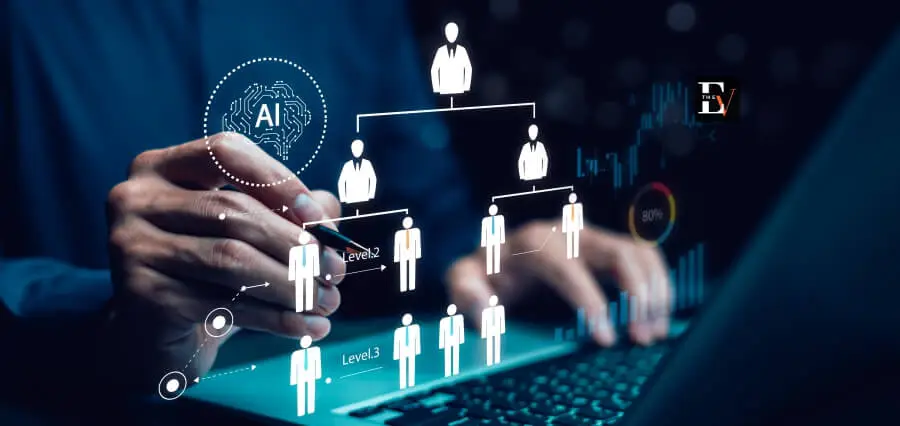
In the old world, software reacted to instructions. In the new one, software takes action. It reads texts, creates multi-step plans, calls other software programs, and reports its findings. Organizations now put these agents together in groups, give them objectives, and evaluate their productivity in the same way they evaluate their human workers. The AI workforce is not a replacement of the organizational structure as much as a layer added on top of it.
The New Architecture of Work
Once work proceeded along a well-defined chain, where an individual would be given a task, complete it, and pass it on. Today, work is broken down into discrete tasks and allocated to both people and machines. Machines perform repetitive tasks with high volumes. People perform judgment calls, negotiations, and exceptions. Those managers who manage to define the allocation of tasks get fast results without losing accountability. Others often find out that mistakes move even faster, and that nobody is responsible for fixing them.
A Real-World Example: Klarna
Klarna, the Swedish payment firm, is a good example. The company reported that in February 2024, its AI workforce , based on OpenAI technology, completed 2.3 million chats for customers within one month, which was around two-thirds of all chats. They reported the equivalent work performance of 700 employees and a reduction in time spent on solving problems from 11 minutes to less than two minutes. However, in 2025, Sebastian Siemiatkowski, the chief executive officer, admitted to Bloomberg that a high level of attention to cost had affected the quality, and Klarna started hiring humans again for customer service jobs.
Human Capability Moves Up the Value Chain
As tasks move into the computer domain, the skills of the human worker become those things that the computer cannot do well – namely empathize, make judgments of right and wrong, be creative, and coordinate with others. Employers want employees who can formulate problems, interrogate the result of an algorithm and justify a choice to an irate customer. Being technically adept is important, but being judicious is even more important.
Risks and Responsibilities
There are costs to disruption. Jobs at the entry level, where beginners learn the trade, are most vulnerable, and economists fear that careers could lose their lower levels. Discrimination in training sets, opacity, and privacy violations create legal and reputational risks. Regulatory agencies in several parts of the world are working on guidelines that require transparency and human oversight for any high-stakes application. Leaders who establish policies for accountability prior to implementation and not post failure protect themselves and their clients.
Preparing the Organization
Successful organizations recognize that managing the AI workforce is an issue of change management rather than a procurement activity. Employees are informed of the processes from early on and what activities will be altered and trained for. The organization implements new systems first in a low-risk environment, monitors performance and expands the systems where the results prove positive. Trust is the key to implementation. People who trust the management become more experimental, report issues earlier and make the systems better through their experience.
The Road Ahead
The coming years will be the acid test for adaptation. Educational institutions, companies, and governments will have to reinvent the way we learn, develop our career paths, and translate productivity growth into better conditions for workers and owners alike. Machines will only become more sophisticated, and the speed of innovation will not stop waiting for committee decisions. Companies that succeed will recognize their intelligent workforce as an ally that has complementary skills to humans, not as a cheaper replacement. The structure of work is being built, and its architects will dictate the division of labor for decades to come.