Prime Highlights-
- More than 100 policymakers, school leaders, teachers and experts from China and Southeast Asia met in Beijing to advance AI and STEM education for rural teachers.
- UNESCO’s Shahbaz Khan urged human-centred, ethical and inclusive AI in education and stronger regional cooperation to deliver equitable, quality learning by 2030.
Key Facts-
- The programme ran from August 17 to 23, 2026, under the theme STEM and AI for rural teachers.
- Organizers included INRULED, SEAMEO RECSAM, Beijing Normal University’s UNESCO AI Chair and Futian District’s Education Bureau.
Background-
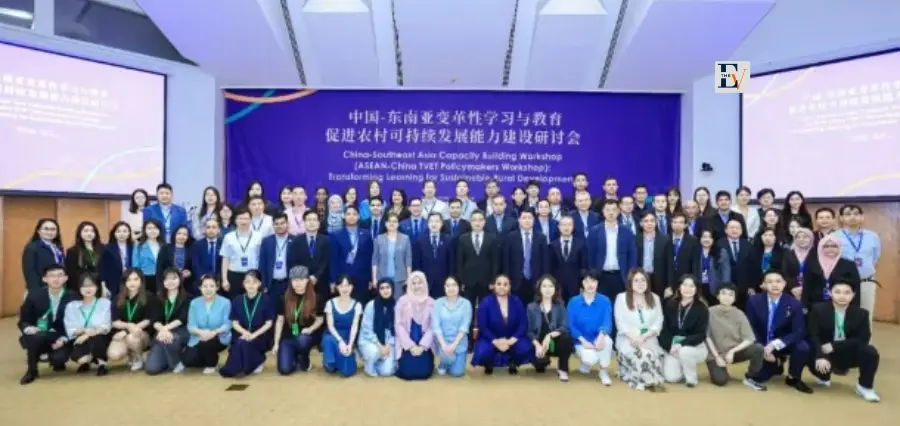
More than 100 education officials, principals and teachers from China and Southeast Asia met in Beijing from August 17 to 23, 2026, and planned how AI and STEM training can help rural teachers lead digital change in their classrooms.
The China–Southeast Asia Capacity Development Programme for Teachers and Principals ran under the theme “STEM and AI: Empowering Rural Teachers for Digital Transformation.” Delegates traded practical lessons on teacher training, AI literacy, digital equity and technology use in rural and underserved communities.
They shared policy approaches and school practices from across the region. Speakers stressed that investment in teacher skills must go hand in hand with spending on digital infrastructure and tools.
Prof. Shahbaz Khan, director of the UNESCO Regional Office for East Asia, addressed the opening symposium by video. He called for human-centred, ethical and inclusive AI in education and urged longer-term regional cooperation to support fair, quality education toward 2030.
Participants also visited schools, education institutions and technology stakeholders in Beijing, where they examined practical ways to use digital learning and AI in classrooms.
The exchanges pointed to one shared message. Technology can drive change in education, but teachers remain central to turning digital innovation into inclusive and equitable learning.
The UNESCO International Research and Training Centre for Rural Education, SEAMEO RECSAM, the UNESCO Chair on Artificial Intelligence in Education at Beijing Normal University and the Education Bureau of Futian District in Shenzhen organized the programme. The UNESCO Regional Office for East Asia, the OECD and the Asia-Pacific Community for Learning Sciences co-organized it.