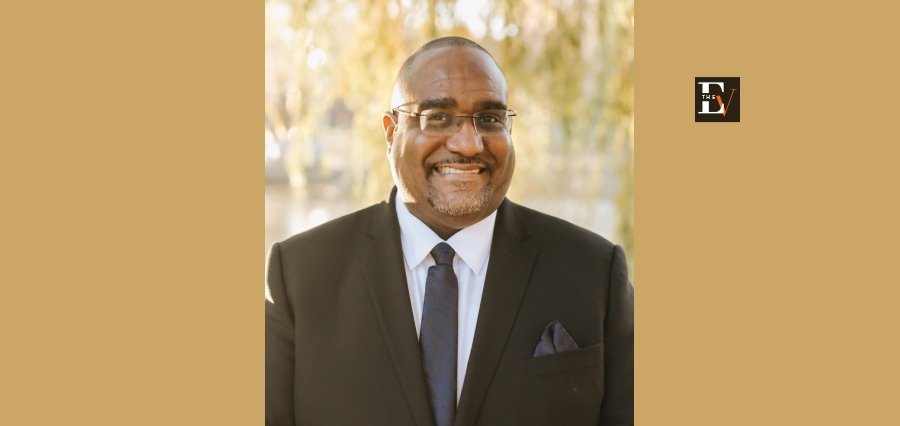
Education’s future will depend on new technologies, evolving curricula, or changing workforce demands. Kevin T. Taylor believes future-ready learners require future-ready institutions, organizations with the leadership discipline, systems integrity, and human-centered stewardship to evolve without losing sight of their mission.
As Founder and Executive Advisor of the Tailored Stewardship Institute, Taylor brings more than two decades of experience across education, executive leadership, non pro it governance, innovation ecosystems, finance, and pastoral ministry. His career has placed him inside institutions facing growth, disruption, financial pressure, organizational transition, and questions of long-term sustainability. Those experiences have shaped a leadership philosophy centered on a deceptively difficult questions: How do leaders make consequential decisions that remain responsible to people, mission, and the future?
From Education Leadership to Institutional Stewardship
Taylor’s professional journey journey includes leadership roles at Scholastic, Achievement First, KIPP Massachusetts, City on a Hill Charter Public School, the Connecticut RISE Network, and Greentown Labs. Across those environments, he developed a deep appreciation for the relationship between institutional strength and human possibility. “Educational institutions shape opportunity, identity, leadership capacity, and long-term social outcomes,” Taylor says. His work demonstrates that belief in practice. At Achievement First, Taylor managed financial planning and operations across a multi-state charter network with $180 million in revenue. At KIPP Massachusetts, he helped oversee finance, operations, talent, and more than $60million in real estate development across three campuses. As CEO of City on Hill Charter Public School, he led a network-wide turnaround that restored financial stability and contributed to the Schools First enrolment waitlist in six years. Later, as Chief Finance and Talent Officered the Connecticut RISE Network, he helped generate approximately$500,000 in savings through systems redesign, vendor optimization, and benefits strengthening governance and long-term financial planning. Those experiences convinced Taylor that student outcomes cannot be separated from the institutions surrounding students. “If we want future-ready learners, we have to build future-ready institutions,” he says.
Four Pillars for Enduring Leadership
Taylor’s philosophy crystallized into the Four Pillars of Enduring Leadership: Clarity of Vision, Integrity of Systems, Courageous Leadership, and Sustainability of Impact. This framework emerged from years of leading schools, non-pro, its, churches, and a climate tech innovation ecosystem under pressure. “Leadership is not primarily about charisma or visibility. It is about stewardship,” Taylor says. Stewardship, for Taylor, means recognizing that decisions rarely end with the person making them: they shape incentives, culture, trust, and institutional memory. That philosophy underlies his award-winning book, A Charge to Keep: Immutable Leadership Lessons from the C-Suite to the Pulpit, which draws on executive leadership and ministry to explore how mission centred institutions endure change.
Visionary Leadership Requires Decision Discipline
Taylor defines visionary educational leadership as preparing institutions responsibly for a future arriving faster than many systems can handle. Leaders face AI, workforce transformation, educator fatigue, financial pressure, declining trust, and polarization. Innovation matters, Taylor argues, but without disciplined stewardship it produces activity without progress. His questions go deeper than whether a program can be implemented: What institution are we becoming? What behaviours our systems reinforcing? What assumptions shape this decision? What will this choice teach people about what the institution values? Are we preparing students only for employment, or also for judgment and citizenship? These sit at the heart of what Taylor calls decision discipline.
Making Leadership Reasoning Visible
Taylor developed his Recommendation Chart during his C-level leadership in the Massachusetts charter school sector. The tool requires leaders to document the information, assumptions, trade-offs, risks, and reasoning surrounding consequential decisions before outcomes are known. That frameworks expanded in A Charge to Keep: A Leader’s Decision Companion. The concept addresses a familiar problem: over time, memory and leadership change, and stakeholders reconstruct events through hindsight or politics. A documented Recommendation Chartcreates a decision artifact: a permanent record of the reasoning behind a decision. That record strengthens judgment and accountability, disciplines especially vital in an AI enabled environment.
AI Should Strengthen Judgment, Not Replace Responsibility
Taylor approaches artificial intelligence through a stewardship lens rather than disruption alone. Alican analyze patterns, test assumptions, and personalize learning, yet technical capability does not eliminate human responsibility. A machine can analyze, but it cannot carry accountability. Responsible innovation means asking not only what technology can do, but what humans remain responsible for deciding.
Excellence, Equity, and Belonging as Structural Commitments
The same systems orientation shapes Taylor’s approach to accessibility and inclusion. Educational excellence and equity, in his framework, are mutually reinforcing institutional commitments. Leaders must examine governance, resource allocation, talent practices, incentives, communication, culture, and accountability rather than treating inclusion as a statement of aspiration. Students, educators, and families should experience environments where they are respected, supported, challenged, and able to contribute meaningfully. Systems matter because institutions eventually reinforce what they repeatedly reward, tolerate, and prioritize. That belief also shapes Taylor’s approach to engagement. Sustainable transformation requires more than securing stakeholder agreement. Educators, students, families, boards, and community partners must understand the mission, trust the leadership, and see how their participation contributes to the institution’s future.
Preparing Institutions for What Comes Next
Taylor sees fragmentation as one of education’s most consequential contemporary risks. Institutions facing multiple pressures can become consumed by urgency. Initiatives multiply, decisions accelerate, and immediate problems can slowly displace long-term purpose. His response is disciplined clarity: strengthen governance, examine assumptions, align systems with mission, document significant decisions, and distinguish temporary pressure from enduring responsibility. “The future of education depends on institutions that combine innovation with stewardship and performance with humanity, “Taylor says. That future, in his view, must prepare students for more than careers. His advice to emerging education leaders is therefore less about predicting the future than becoming worthy stewards of it. Clarify the mission. Strengthen the systems. Develop people. Protect institutional trust. Document the reasoning behind consequential decisions. Think beyond your own tenure. Leadership, Taylor argues, is ultimately an exercise in responsibility. The decisions leaders make today shape people, institutions, and communities long after the moment itself has passed.