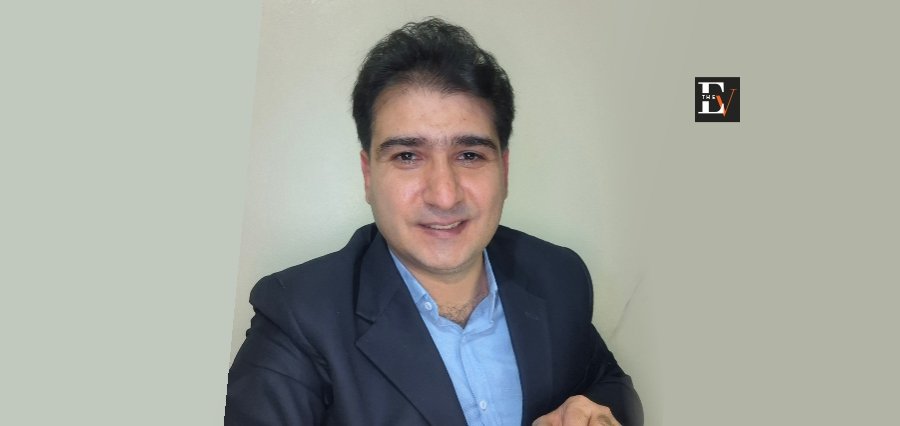
Research education has long suffered from a gap between what institutions teach and what learners actually need to apply in the real world. Data analysis, scientific methodology, and evidence based thinking are skills that shape careers and drive meaningful progress. As technology and research keep changing the way people learn, educational leaders are opening new doors for learners to build practical, analytical and problem-solving abilities.
Among them is Dr. Saleh Ashrm, Research Supervisor and Scientific Research & Data Analytics Instructor at Schobot AI. With experience in industry, research and education, he works to raise the standard of research, promote learning that is grounded in data, and give learners access to training and mentorship that is both high in quality and easy to engage with.
A Journey Bridging Industry and Education
Dr. Saleh’s professional journey combines industry, research, and education. Over the past decade, he has worked across banking, manufacturing, textiles, pharmaceuticals, and automotive-related sectors, gaining practical experience in finance, accounting, and business operations.
While advancing professionally, he discovered a strong passion for knowledge sharing. This led him to contribute to research training, data analytics education, and scientific mentoring. He believes education is one of the most effective tools for creating sustainable change, empowering individuals, and building future leaders.
Shaping Leadership Through Experience
Dr. Saleh’s leadership philosophy has been shaped by managing financial responsibilities in complex organizations, collaborating with multidisciplinary teams, and mentoring researchers from different academic backgrounds. These experiences taught him that “Leadership is not about authority but about enabling others to succeed.”
He focuses on continuous learning, evidence-based decision-making, transparency, and creating opportunities for people to develop their capabilities. For him, effective leadership is built on trust and the ability to help others grow.
Defining Visionary Leadership in Modern Education
According to Dr. Saleh, visionary leadership means preparing learners for challenges that do not yet fully exist. Educational leaders must anticipate technological, economic, and environmental transformations while fostering critical thinking, adaptability, and lifelong learning.
He believes that a visionary leader creates ecosystems where innovation, collaboration, and practical skills are integrated into education rather than treated as separate objectives.
Contributing to Future-Ready Education
Through his collaboration with Schobot AI, Dr. Saleh has contributed to training and supporting more than 25,000 researchers and learners in data analysis, scientific research methodologies, SPSS, and R-Studio applications.
His objective is to help learners move beyond theoretical knowledge toward analytical thinking, research excellence, and evidence-based problem-solving skills that are essential in today’s knowledge economy. His work aims to equip learners with capabilities that enable them to address complex challenges and contribute meaningfully to society.
Transforming Learning Through Technology
Technology and innovation play a central role in Dr. Saleh’s educational vision. He actively promotes the responsible use of AI, statistical software, data analytics, and digital learning platforms. By integrating AI tools with research methodologies and analytical frameworks, learners can improve efficiency while maintaining scientific rigor.
He believes that technology should enhance human intelligence rather than replace critical thinking.
Promoting Accessibility and Quality
Accessibility and inclusivity remain central to Dr. Saleh’s approach to education. He strongly supports open learning opportunities and accessible educational content.
Through workshops, training sessions, and collaborative initiatives, he seeks to make advanced research methods and analytical tools available to learners regardless of geographical or institutional limitations. He believes, “Quality education should be both accessible and academically rigorous”, ensuring that learners everywhere have opportunities to benefit from knowledge and innovation.
Meaningful Contributions to Education
One of Dr. Saleh’s most meaningful achievements has been contributing to the development of a research community that supports academics and postgraduate students across the Arab region.
He has also participated in international educational quality initiatives, including a QAA-supported review project involving academics from the University of Lincoln aimed at creating more engaging and inclusive higher education experiences. As a reviewer for the QAA-funded Collaborative Enhancement Project, “Standing Out in the Crowd,” he contributed to strengthening student engagement and student-centered academic practices through collaboration with universities across the United Kingdom, Canada, Australia, South Africa, Ghana, India, Belgium, Malaysia, and the United States.
Through these collaborations, he continues to support global dialogue on quality enhancement in higher education and the advancement of inclusive learning experiences.
Engaging Educators and Stakeholders
Dr. Saleh emphasizes collaboration, practical relevance, and continuous dialogue. Through workshops, research supervision, publications, and professional networking platforms such as LinkedIn, he connects educators, researchers, and industry professionals.
By encouraging interaction among different stakeholders, he helps bridge the gap between academic knowledge and real-world challenges. This approach supports stronger collaboration and promotes practical applications of research and learning.
Addressing Emerging Educational Challenges
Dr. Saleh recognizes that the rapid evolution of technology, the rise of artificial intelligence, skills mismatches, and unequal access to quality education are among the most significant challenges facing education today.
He believes addressing these issues requires combining technological innovation with strong ethical standards, critical thinking, and continuous professional development for both educators and learners.
A Forward-Looking Approach to Education
Looking ahead, Dr. Saleh envisions an educational ecosystem where technology, sustainability, research excellence, and practical skills are seamlessly integrated. He believes future education should focus on developing adaptable problem-solvers rather than simply transferring information.
His advice to emerging leaders is to remain curious, embrace lifelong learning, prioritize impact over recognition, and view education as a catalyst for sustainable development and societal progress. Through his work and vision, Dr. Saleh Ashrm continues to contribute to creating learning environments that empower individuals and support long-term progress.