Across the Middle East and North Africa, the conversation around artificial intelligence has moved faster than many organizations were prepared for. Boardrooms began budgeting for AI before teams had built the practical fluency needed to use it responsibly. Training programs followed, but many remained heavy on theory and light on application, widening the gap between AI awareness and genuine operational capability.
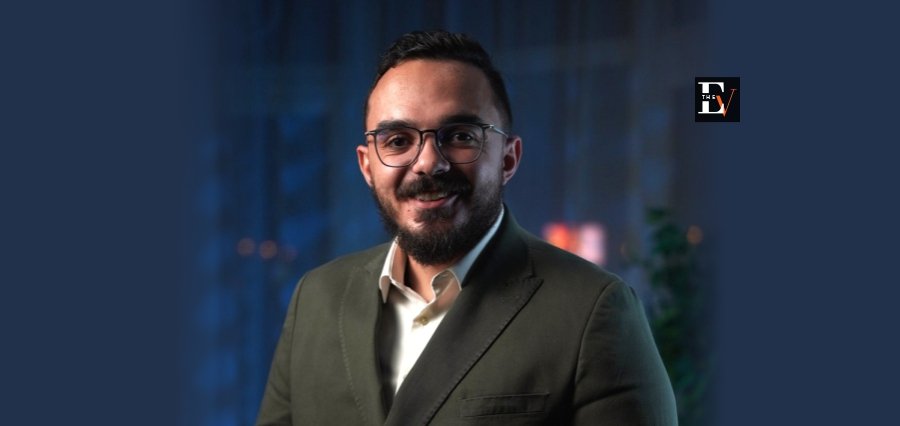
Closing that gap requires education built around real business context, measurable outcomes, and governance that can withstand scrutiny. Dr. Ahmed El-Shamy, Co-founder and CEO of Digisoul, treats AI knowledge not as a product to be consumed, but as a practice that only creates value when learners can apply it inside real organizations, in the right language, and within the right regulatory framework.
A Mission Born in the Boardrooms of MENA
Dr. Ahmed’s journey began with a recurring observation across MENA boardrooms. AI conversations were accelerating rapidly, but organizations lacked usable fluency. Executives were expected to govern and lead technologies their teams could not yet operate. Consultants packaged theory. Vendors sold tools. Few translated AI into practical Monday-morning capability.
This focus on implementation rather than presentation became the foundation of his educational philosophy.
Key Experiences That Shaped His Leadership Approach
Working inside regulated industries taught Dr. Ahmed that adoption fails when training ignores operational context. PDPL compliance, GDPR requirements, Arabic user-experience expectations, and audit committee realities must be integrated directly into the learning experience.
Speaking at the RiseUp Summit inside the Grand Egyptian Museum reinforced his belief that learners want proof, not polish. His DBA research at Royal Business College UK on Generative AI governance sharpened a personal rule: “Every claim is sourced, every output is auditable, and every learner leaves with something a regulator can read.”
Defining Visionary Leadership in Education Today
For Dr. Ahmed, visionary leadership is about building three things at once: relevance, defensibility, and dignity. Relevance means curricula that match the speed of the field. Defensibility means governance systems that satisfy financial and regulatory expectations. Dignity means delivering education in the learner’s language and cultural context.
“Vision without delivery becomes theatre, while delivery without governance becomes hazardous.” The leader’s job is to hold both delivery and governance in tension, every cohort, every week.
Creating Future-Ready Learners Through Practical Outcomes
Dr. Ahmed defines future-ready education through measurable and practical outcomes rather than participation alone. At Digisoul, learners leave with shipped work instead of certificates of attendance.
Every AI4X cohort is built around production-ready artifacts using the learner’s real business context, alongside governance frameworks including PDPL, GDPR, NIST AI RMF, and ISO/IEC 42001.
Slides, prompt cards, and workbooks are produced in English and Arabic so that a CFO in Riyadh and a department head in Cairo can work from the same playbook within local business realities.
According to reported alumni results, selected participants have achieved forecast-accuracy improvements of up to forty percent and reclaimed eight to twelve executive hours per week through operational AI integration. These outcomes are treated as program-reported results tied to specific cohort contexts, not as universal guarantees.
Transforming Learning Through Hands-On AI Education
Dr. Ahmed’s team treats the learning management system as a workspace, not a video library. Learners build inside live tools including Claude, Gemini, Perplexity, Microsoft Copilot, NotebookLM, n8n, Make, Zapier, and Power BI.
Around seventy percent of cohort time is hands-on lab work using regional business cases, with the objective being workflow transformation, not tool familiarity alone.
Digisoul Brain, a structured prompt and context library covering MENA use cases, helps participants start from localized reasoning and regionally aware assumptions. In Dr. Ahmed’s view, learners should close the laptop at the end of a session and be able to run the workflow the next business morning.
Accessibility, Inclusivity, and Quality Built into the System
Dr. Ahmed approaches accessibility, inclusivity, and quality through three dimensions:
- Linguistic accessibility is supported through Arabic delivery, RTL-ready materials, and Egyptian-dialect facilitation when needed.
- Regulatory accessibility is supported by embedding PDPL and GDPR principles into workflows for safer AI use inside regulated employers.
- Economic accessibility is supported through cohort pricing, employer invoicing, and group structures practical for SMEs and enterprise-sponsored learners.
Digisoul also favors practitioners who have shipped AI inside MENA enterprises over visiting lecturers delivering abstract theory, maintaining measurable standards and governance alignment across all programs.
AI4X: A Defining Initiative Driving Real Enterprise Change
A defining initiative in Dr. Ahmed’s educational work is AI4X, Digisoul’s enterprise AI training suite, anchors two flagship cohorts.
Practical GenAI in FP&A trains finance leaders to develop an AI-driven variance explainer, a driver-based forecasting model with scenario logic, and an executive dashboard with anomaly detection and commentary.
Practical GenAI for Business Leaders equips CEOs, founders, and department heads with a custom AI assistant, a capstone workflow tied to business impact, and a 30-60-90 day rollout plan for real organizational use.
Each cohort closes the gap between AI awareness and operational capability by turning learning into usable business assets.
Engaging Learners, Educators, and Stakeholders with Clarity
Dr. Ahmed believes engagement strategies must differ by audience. Learners need cohort channels, weekly office hours, peer review, and practical support. Educators need assisted systems for research, course design, and instructional production. Senior stakeholders need governance artifacts including AI charters, 30-60-90 rollout plans, and vendor-evaluation playbooks they can formally review and approve.
Trust, in his words, is built in writing, not only on stage.
Navigating the Biggest Challenges in Education Today
Dr. Ahmed believes three challenges dominate AI education today.
- Model fluency is outrunning governance fluency. Organizations are launching pilots they cannot defend, document, or scale.
- MENA training markets are crowded with generic global content ignoring Arabic, local regulators, and operating reality.
- Senior leaders often mistake prompting for adoption. Real progress is measured through hours reclaimed, cycle time reduced, accuracy improved, and decision quality strengthened.
Digisoul addresses these by embedding governance into every cohort, localizing datasets and examples, and measuring outcomes beyond completion rates.
A Vision for the Future of Education in the AI Era
Looking ahead, Dr. Ahmed believes AI literacy across MENA will become as essential as financial literacy. As AI becomes embedded in strategy, operations, finance, customer experience, and compliance, leaders will need competency that is practical, certified, and regulator-aware.
His advice to emerging education leaders: build curricula capable of surviving scrutiny from three audiences at once, the CFO, the regulator, and the board. If the same artifact survives all three rooms, it has lasting value.
For him, “Education in the AI era is judged by what graduates ship, not by what instructors say.”