Prime Highlights :
- More than 400 Moquegua teachers attended the education-focused congress.
- Discussions centred on socio-emotional well-being, diverse learning needs and supportive school environments.
Key Facts :
- The event was organised by the Moquegua Regional Directorate of Education with Anglo American Quellaveco and UNESCO.
- The Reimagina Programme supports education improvement across Moquegua.
Background :
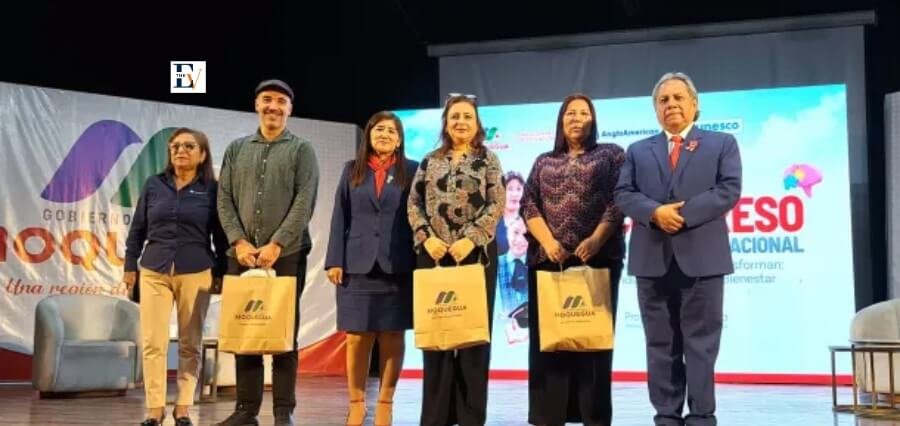
More than 400 teachers from across Peru’s Moquegua region attended the Sixth International Pedagogical Congress, which focused on improving student learning, emotional well-being and inclusion in schools.
The event, held in the second week of July at the Moquegua Regional Government Auditorium, was organised by the Moquegua Regional Directorate of Education with Anglo American Quellaveco and UNESCO. It formed part of the 2026 Teachers’ Day celebrations.
These include helping students address their emotional requirements, accommodating teaching methods to various learning techniques and fostering environments at schools where interaction is promoted.
The presentation was given by Celia Quenaya, UNESCO’s education specialist in Peru, who stressed the importance of developing students’ socio-emotional skills and building good relationships in schools. María Alexandra Portilla of UNIFÉ Peru discussed classroom diversity and the need to respond to individual student needs.
Italian architect Michele Albanelli examined how school design can influence learning, interaction and participation.
Moquegua education officials said the discussions support regional education priorities, particularly student well-being and inclusion in regular basic education. Teachers also shared practical challenges, including how to understand students better and strengthen cooperation among school staff.
The congress highlighted neurodiversity as an important area for teachers. The recognition of different capacities was highlighted, as it can help provide better support in the education spaces.
The event brought to light that education improvements cannot be accomplished through physical resources alone. Strong teaching practices, effective school leadership, positive relationships and student-focused approaches remain essential.
The congress was held under the Reimagina Programme, an Anglo American initiative implemented with regional education authorities and UNESCO. The programme aims to improve education across Moquegua and encourage schools to put greater focus on well-being, inclusion and meaningful learning.