Education has always carried the potential to change the direction of a life. But realising that potential consistently, across different communities, learner backgrounds and institutional contexts, requires leadership that goes well beyond academic administration. It requires people who understand systems, hold equity as a genuine priority, and approach their work with both moral conviction and practical discipline.
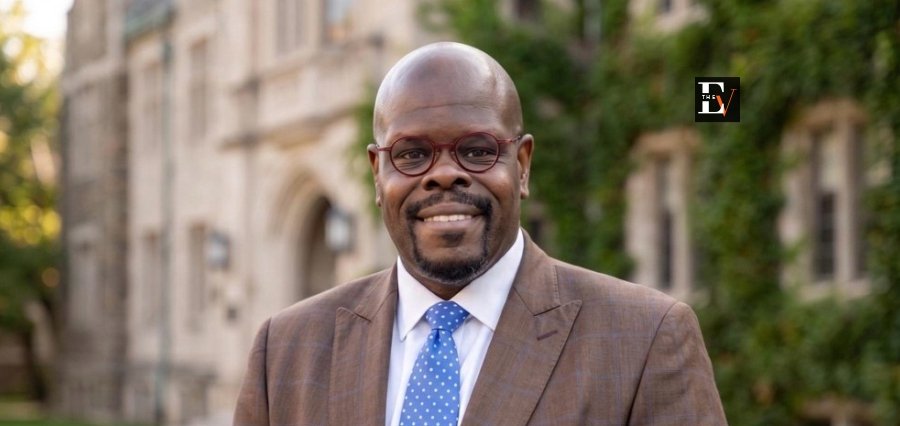
Dr. Santarvis Brown, PhD, JD, Professor of Management and Leadership at Excelsior University, has spent over two decades building his career around exactly that standard. Through his commitment to advancing leadership development, academic innovation and learner success. His work reflects a dedication to empowering learners and preparing future leaders for an ever-changing world.
A Journey Guided by Service and Transformation
For Dr. Santarvis, the path to education has always existed at the intersection of faith, service, leadership, and learning. He began his career by serving students directly as a teacher, assistant principal, and K-12 principal. These early experiences allowed him to witness how education could influence academic outcomes, family trajectories, and community possibilities.
Over more than two decades, his professional journey expanded into higher education, nonprofit leadership, tribal education, online learning, and executive academic leadership. What inspired him most was the belief that education is one of society’s most powerful instruments for dignity, mobility, justice, and transformation.
Leadership Rooted in Mission and Relationships
Dr. Santarvis’s leadership philosophy has been shaped by environments where mission, culture, and systems needed to work together. His work with the Seminole Tribe of Florida Department of Education taught him the importance of cultural humility, sovereignty, and generational thinking. Managing a $10 million grant portfolio at Miami Dade College strengthened his understanding of accountability, outcomes, and partnership. Later, at Miami Regional University, he led academic growth during a period of enrollment expansion.
These experiences shaped his belief that leadership is relational, strategic, ethical, and deeply human.
Visionary Leadership for a Changing Educational Landscape
According to Dr. Santarvis, visionary leadership in education is the ability to see beyond immediate institutional pressures while responding responsibly to present learner needs. It requires anticipating workforce changes, technological disruption, equity gaps, and evolving student identities, while building systems that prepare learners to thrive in the future.
For him, “visionary leadership is not about charisma or titles; it is about moral imagination, disciplined execution, and the courage to create pathways for those historically left outside traditional systems of opportunity.”
Preparing Future-Ready Learners
As a Professor of Leadership, Dr. Santarvis focuses on preparing adult learners, working professionals, and emerging executives to lead with vision, ethics, cultural intelligence, and strategic clarity in complex environments.
He has helped design and launch advanced graduate pathways, including Executive MBA and Doctor of Business Administration programs, aligning learning with strategy, analytics, innovation, sustainability, and applied research. His work also emphasizes retention, progression, belonging, and psychological safety.
He believes future-ready learners need more than content. They require confidence, context, support, and integrity to succeed.
Leveraging Technology for Meaningful Learning
Dr. Santarvis believes technology is most powerful when it expands human possibility rather than replacing human connection. His work has included strengthening digital learning systems, optimizing online platforms, supporting asynchronous learning, and advancing hybrid models that combine flexibility with meaningful engagement.
At Saylor Academy, he supported free online learning opportunities for a global learner community. At Cornell eCornell, he worked with digital learning ecosystems and faculty facilitation. Today, he views AI, analytics, and online learning as tools that can enhance personalization, early intervention, and access when guided by ethics and equity.
Expanding Accessibility and Inclusion
Accessibility, inclusivity, and quality remain central priorities in Dr. Santarvis’s educational leadership. He approaches these challenges by asking important questions: Who is missing? Who is struggling silently? What barriers are educational systems creating? His efforts have included culturally responsive education with Tribal communities, open-access learning through Saylor Academy, equity-centered grant initiatives, and the Cornell on the Inside Prison Pilot Program for incarcerated learners.
He believes quality and access should not be treated as opposites. Instead, rigorous learning environments should also be flexible, culturally responsive, affordable, supportive, and designed around the realities of learners’ lives.
Creating Pathways Where They Are Needed Most
One initiative that reflects Dr. Santarvis’s impact was pioneering the Cornell on the Inside Prison Pilot Program. The initiative centered dignity, access, and transformation for incarcerated learners while demonstrating how elite educational institutions can contribute to social impact.
He is also proud of helping secure Cognia accreditation for the Seminole Tribe of Florida Department of Education and launching high-impact graduate programs at Excelsior. Across these achievements, a common theme emerges: expanding pathways where they are needed most.
Building Trust Through Shared Vision
Dr. Santarvis engages educators, students, and stakeholders through listening, shared ownership, transparent communication, and storytelling grounded in data. He believes educators should see themselves as co-creators, not implementers of someone else’s vision, while students should recognize that their lived experiences are valuable assets in the learning process.
By connecting vision to measurable action and honoring the wisdom already present among faculty, administrators, community partners, and learners, he works to build trust and collaboration.
Navigating the Challenges of Modern Education
Dr. Santarvis recognizes that education today faces numerous challenges, including learning loss, inequitable access, affordability pressures, workforce disruption, digital divides, mental health needs, and the ethical use of artificial intelligence. Rather than chasing every emerging trend, he believes institutions must focus on building resilient systems. His approach involves aligning programs with real-world needs, using data responsibly, supporting faculty excellence, expanding flexible pathways, and ensuring that equity remains central to innovation.
Looking Toward the Future
Looking ahead, Dr. Santarvis’s vision for the future is an education system that is lifelong, inclusive, technology-enhanced, culturally grounded, and deeply connected to purpose. He believes education should prepare learners not only to earn credentials but also to solve problems, lead ethically, build communities, and adapt with wisdom.
For emerging leaders, he offers simple but profound advice: lead with courage and humility, listen before designing, measure what matters, build bridges across difference, never confuse access with belonging, and always remember that leadership is about helping others become.