University leadership has grown considerably more complex in recent years. Today’s academic leaders are expected to guide institutions through technological change, retain exceptional faculty and produce graduates equipped for a professional world that continues to shift in fundamental ways. Real educational leadership means rethinking assumptions from the ground up.
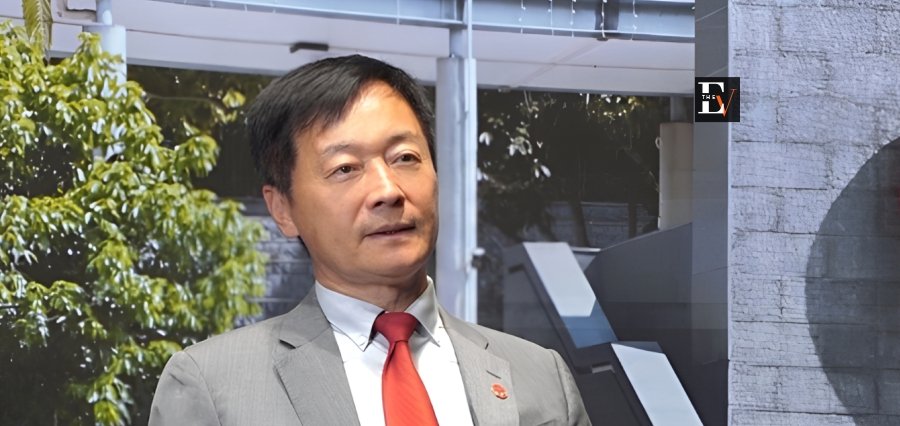
Prof Joe Qin, President and Wai Kee Kau Chair Professor of Data Science of Lingnan University, brings exactly that mindset to academic leadership. Decades devoted to engineering research and academic practice gave him a perspective on institutional leadership that sits outside the traditional mould. Rather than focusing on preserving established ways of working, his attention is directed toward understanding what universities must become in order to remain relevant.
A Journey Driven by Education
Prof Qin’s commitment to education has been shaped by perseverance and a lifelong pursuit of knowledge. Growing up in Shandong, he had limited access to formal schooling during his early years. By the age of eleven, he had taught himself to make wooden chairs to help support his family. When China’s national university entrance examinations resumed, he seized the opportunity and earned admission to Tsinghua University at just sixteen after achieving the highest score in his cohort.
His academic journey took another defining turn during his postgraduate studies at Tsinghua University. A conversation with the distinguished scholar Professor Harmon Ray inspired him to pursue doctoral studies in chemical engineering at the University of Maryland. That decision opened the door to an international academic and research career.
From Engineering Research to Academic Leadership
After completing his doctorate, Prof Qin began his professional career as a Principal Engineer at Emerson Process Management, contributing to the development of commercial technologies before returning to academia. During the following two decades, he taught and conducted research at The University of Texas at Austin and later at the University of Southern California, establishing an international reputation in industrial data analytics, process monitoring, and intelligent automation.
In 2019, after spending twenty-five years in the United States, he relocated to the Hong Kong Special Administrative Region, China. While many questioned the city’s future, he recognised its enduring strengths as an international academic hub and believed he could contribute to the long-term development of higher education and scientific research.
Preparing Students for an AI-Driven Future
Prof Qin describes artificial intelligence as an “intellectual revolution” because, unlike earlier technological revolutions that mechanised physical labour, AI increasingly automates cognitive tasks once considered uniquely human. He believes, “Universities must rethink what knowledge should be taught, what skills remain uniquely human, and how graduates can thrive in a world where machines increasingly outperform people in routine intellectual work”
At Lingnan University, this vision has led to a strategy that integrates liberal arts education with scientific and technological capability while embracing digital literacy. Instead of resisting AI, the University has chosen to integrate it into teaching and learning.
Advanced AI platforms have been made freely available across campus, generative AI has been embedded into the curriculum, and a compulsory core course ensures every undergraduate develops both technical competence and ethical judgement. He believes the more important educational question is whether students understand when AI should be trusted, when it should be challenged, and when human judgement must prevail.
He also believes universities should devote less attention to teaching competencies that intelligent machines may soon perform more efficiently. Instead, education should increasingly cultivate critical thinking, ethical judgement, creativity, interdisciplinary reasoning, cultural understanding, and social responsibility.
Redefining Liberal Arts for the Digital Age
Under Prof Qin’s leadership, Lingnan University has established a vision to become a research-focused liberal arts university comprehensive in arts and sciences in the digital era. Rather than treating engineering and the humanities as separate traditions, the University has worked to dissolve conventional disciplinary boundaries.
Its “liberal arts + technology” and “AI+” strategies encourage students to combine technical expertise with humanistic insight. Data science students develop communication skills through compelling narratives rather than statistics alone. Philosophy students explore algorithmic fairness and AI ethics, while interdisciplinary programmes combine digital technology, creative practice, and entrepreneurship.
The University’s investment extends beyond curriculum reform. High-performance computing infrastructure enables students and researchers across engineering, history, sociology, and business to undertake computational research previously beyond their reach. AI-assisted assessment systems also reduce routine administrative workloads, allowing academic staff to spend more time on personalised teaching and intellectual mentoring.
Achievements That Reflect a Bold Vision
Under the leadership of Prof Qin, this balance between technological innovation and whole-person education has become one of Lingnan University’s defining strengths. The University retained the world’s No. 1 position in SDG 4: Quality Education in the Times Higher Education Sustainability Impact Ratings 2026. It also entered the Times Higher Education Asia University Rankings top 100 on its debut, ranking 84th.
In the QS World University Rankings 2027, Lingnan climbed more than 120 places to 581st globally, while the U.S. News & World Report 2026–27 Best Global Universities Rankings recorded the University’s biggest improvement among Hong Kong institutions, rising 226 places to 783rd worldwide.
Advancing Education Through Technology and Talent
As China’s national strategies increasingly emphasise the integrated development of education, technology, and talent, Prof Qin believes Hong Kong SAR’s universities have significant opportunities to contribute to the Greater Bay Area while maintaining an international outlook. Lingnan’s expanding partnerships with leading institutions worldwide, together with the recruitment of internationally renowned scholars in engineering, data science, and AI, reflect this commitment.
Although his induction into Control Global’s Process Automation Hall of Fame recognises a distinguished career connecting scientific discovery with industrial practice, he continues to place education at the centre of his work. For him, technology will continue to evolve, but universities must ensure that human judgement, curiosity, and wisdom evolve alongside it.