Education leaders transform people, builds stronger communities and equips future generations to face the challenges ahead. As the world changes, they are responsible for creating environments where students can learn, grow and gain the skills they need for the future. That kind of leadership is never the result of a single initiative or a well-timed decision. It grows through years of steady effort, honest investment in students, and a real sense of personal responsibility toward the institution one serves.
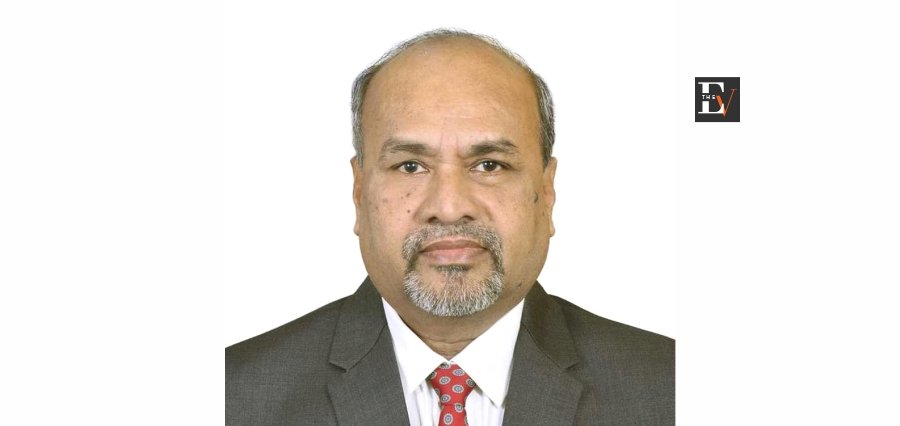
Prof. Subhash Yaragal, Professor (HAG) and Deputy Director at National Institute of Technology Karnataka, Surathkal, has given nearly three decades of his professional life to this work. His career across teaching, research, mentorship and institutional development has left a mark on the institution, its students, its faculty, and the wider community.
Journey of Leadership, Research, and Service
Prof. Subhash’s professional journey reflects decades of dedication to education, research, institutional development, and academic excellence. Born in 1965, he obtained his bachelor’s degree in civil engineering from National Institute of Technology Karnataka, Surathkal in 1987 and later earned his postgraduate and doctoral degrees from Indian Institute of Science, Bangalore. Between 2003 and 2005, he completed his postdoctoral research in Tokyo, Japan, in the area of wind hazard mitigation.
He joined NITK Surathkal in 1996 and currently serves as Professor (HAG) and Deputy Director, a position he has held since August 2024. He is also an invited member of the Building and Works Committees of IIIT Dharwad and IIIT Raichur.
Over the years, he has remained actively engaged in teaching, research, consultancy, and administration. He has completed several research projects funded by the Government of India, BRNS-BARC, CPRI, MHRD, and other organizations and has published more than 275 technical papers in reputed national and international journals and conferences. He has also served the institute in various capacities including BoG Member, Dean (Planning & Development), Senator, Associate Dean (UG), and Head of the Department of Civil Engineering.
His passion for teaching began during his childhood while observing his father teach students with care and complete involvement. That early influence inspired his lifelong commitment to education.
Leadership Guided by Values
Prof. Subhash considers himself fortunate to have studied at Sainik School Bijapur, where seven years of schooling helped him develop the fundamentals of hard work, discipline, ethics, culture, and values. His graduation from NITK Surathkal remains a matter of pride. Since joining the institute in 1996, he has worked with full commitment towards its betterment and development and believes in maintaining a positive approach.
According to him, visionary leadership must advocate collaboration and networking. He believes, “International collaboration is a must and must be driven with rigor.” He also emphasizes that curriculum revisions should happen frequently to address changing global scenarios and evolving industry requirements.
Creating an Environment for Success
A key focus of Prof. Subhash’s work is creating an academic environment where students, faculty, and staff engage meaningfully through curricular, co-curricular, and extra-curricular activities. This induces a conducive atmosphere for students to perform well and face the outside world with confidence.
He strongly aligns with the institute’s vision of transforming students into good human beings, responsible citizens, and competent professionals. He seeks to utilize his vast experience to develop both the institute and the surrounding community and move towards excellence and international recognition.
Recognizing the changing educational landscape, he believes the teaching fraternity must adopt state-of-the-art technology and innovative methods of knowledge transfer to provide students with experiential learning. He also believes that recommendations from the Ministry of Education and the implementation of the National Education Policy will ensure accessibility, inclusivity, and quality in education.
Driving Impact Through Sustainable Initiatives
Among the initiatives that reflect Prof. Subhash impact is the effort to address water scarcity on campus. Rainwater harvesting was implemented with a reservoir capable of storing 300 lakh litres of water, equivalent to nearly thirty days of campus consumption. The reservoir measures 110 × 60 × 5.5 metres and incorporates layers of geotextile and geomembrane.
Engaging Stakeholders Through Collaboration
Prof. Subhash believes that separate meetings with different stakeholders are essential while drafting the institutional vision. Several rounds of brainstorming sessions help refine the vision statement and ensure collective participation.
Recognitions and Contributions
Prof. Subhash has received several prestigious honours, including the Prof. Satish Dhawan State Award for Young Engineers, the Award for Research Publication from the Vision Group of the Government of Karnataka, and the Union Ministry of Water Resources Department of Irrigation award for best research publication. He has also been honoured as an Eminent Engineer by ACCE, Mangalore, while JK Cements recently recognized him as Champion of Civil Engineering.
His contribution to research mentorship has been equally remarkable. Nine students have completed doctoral degrees under his supervision, while four are currently pursuing their doctorates. He has guided more than seventy-five Master’s dissertations and has served as evaluator and examiner for more than one hundred doctoral theses from various universities.
Addressing Challenges and Shaping the Future
According to Prof. Subhash, one of the major challenges facing education is keeping pace with technological changes, changing student mindsets, and evolving industry requirements. He believes these challenges can be addressed through hands-on training, workshops, conferences, and skill development initiatives.
Looking ahead, he envisions a more learning-centric education system with greater emphasis on field-oriented courses and self-learning components. He also advocates providing students with greater flexibility in interdisciplinary learning and encouraging internships and projects in universities and industries, both in India and abroad.
For emerging leaders, his message is simple: they should gear up with changing times on all fronts.