Prime Highlights
- Yang Dan told attendees the ministry’s policy will not reverse course, and that approvals are now public, transparent, and predictable.
- The ministry said future TNE development must focus on quality over numbers, with institutions expected to show strong academic credibility and alignment with national priorities.
Key Facts :
- China’s Ministry of Education oversees the approval and regulation of all transnational education partnerships involving overseas higher education institutions operating within the country.
- As of the end of May 2026, more than 1,700 approved undergraduate-level and above TNE institutes and programmes are active in China, involving partners from 45 countries and regions.
Background :
China’s Ministry of Education (MoE) has reaffirmed its commitment to expanding transnational education (TNE) partnerships, signalling continued policy support for overseas institutions operating in the country.
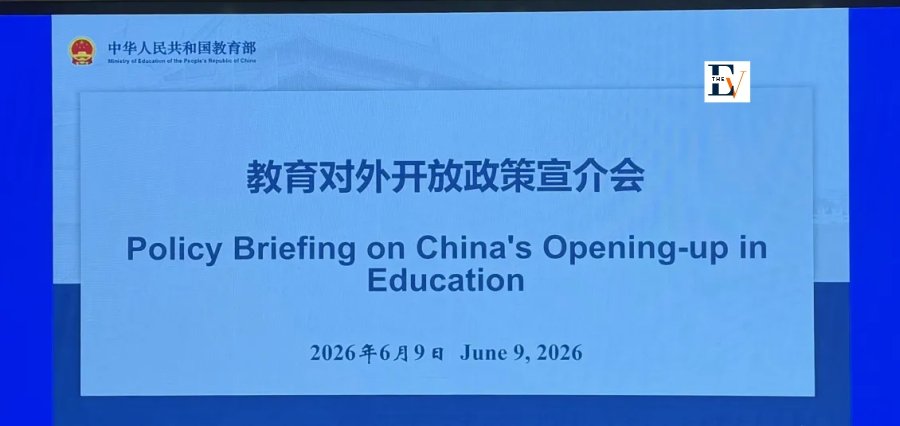
At a policy briefing held in Beijing in the second week of June for diplomatic missions and international organisations, ministry officials said the government will not reverse its support for TNE. Yang Dan, Director-General of the Department of International Cooperation and Exchange, told attendees that approvals are now public, transparent, and predictable. He stressed that the ministry wants foreign providers to see the current policy environment as stable and sustainable.
Officials shared updated figures, noting that over 1,700 approved undergraduate-level and above institutes and programmes are now active in China, involving partners from 45 countries and regions and more than 1,100 overseas higher education institutions. The ministry approved 219 joint institutes and programmes in the first half of 2026 alone. It also said 34 universities ranked in the global top 100 currently operate in China.
The ministry urged overseas institutions to explore opportunities in central and western China, where local governments are keen to attract international providers. It linked growing domestic demand for international education to rising mobility costs and population trends, noting the university-age group is set to expand further before declining sharply after 2035.
Officials said future growth must prioritise quality, with institutions expected to demonstrate strong academic standing and alignment with China’s development goals. The ministry also said it is revising its TNE regulations and will issue new guidance on setting up partnerships.