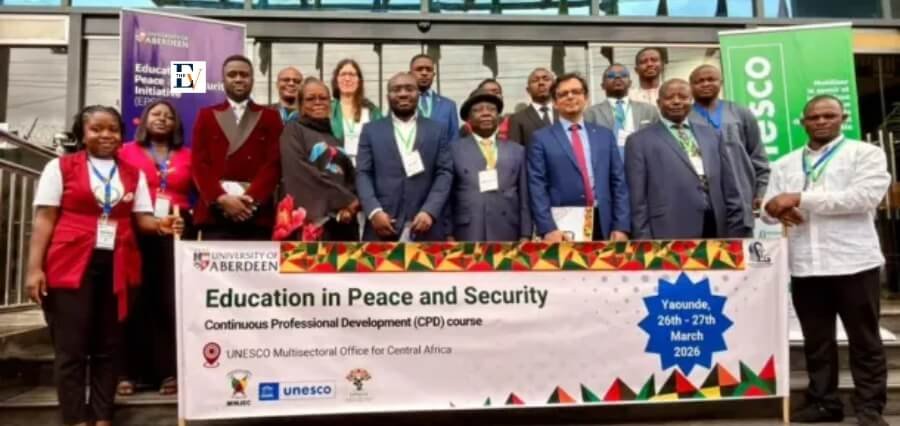
Prime Highlights :
- UNESCO leads a major two-day training to strengthen education-based approaches to peace and security in Cameroon.
- The initiative unites four leading institutions to equip participants with practical peacebuilding and policy skills.
Key Facts :
- The training runs from 26 to 27 March 2026 in partnership with LOYOC, IIPSDA and the University of Aberdeen.
- Sessions cover peace and security theory, civilian protection, youth participation and education-based policy design.
Background :
UNESCO’s Regional Office in Yaoundé teamed up with three partners for a two-day training on peace and security. Cameroon’s security landscape has been changing, and the training grew out of that reality.
Organizers had a clear aim. They wanted education to shift toward prevention rather than reaction when it comes to conflict. Attendees used the two days to explore how schools and learning programs could go beyond simply passing on information.
When applied well, education can build resilience, bring communities closer and support stability that lasts years rather than months. Khodabux Imteyaz, head of the Science Sector, spoke in place of the UNESCO Regional Director.
His message was direct: solving security problems takes real skills and grounded knowledge, not just good intentions. He added that peace lasts when policies are sound, institutions hold firm and people feel they have a stake in the outcome.
Experts led sessions covering several ground topics.
Peace and security theory came up, along with how to protect civilians, how to bring young people into peacebuilding work, and how policies get designed and judged through a prevention-first lens.
Much of the training ran on exchange rather than lecture. People compared notes across different fields, and input from those in conflict-affected regions shaped a good part of what got discussed.
Once the training ended, attendees left with something concrete: research-backed methods they could put to use, stronger links between institutions, and a better handle on what makes peace and security policy actually work.
The effort ties into a broader UNESCO push, one built on the idea that education can serve as a lasting foundation for peace in Cameroon.