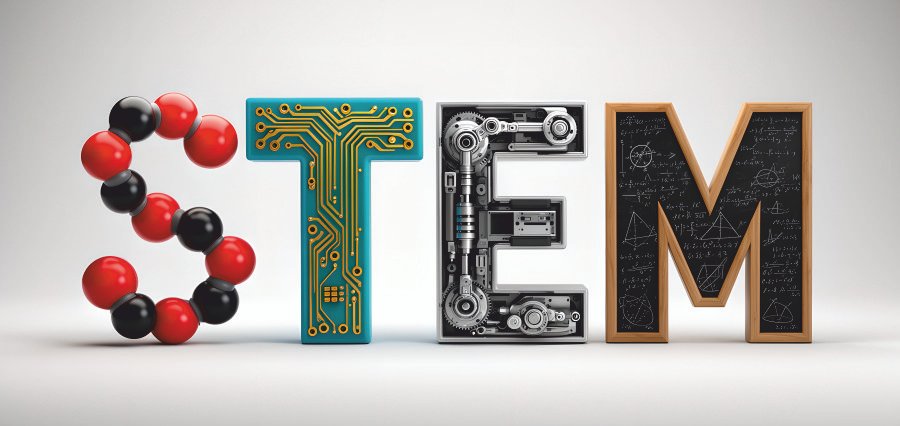
Education is evolving rapidly as technology, innovation, and interdisciplinary learning reshape the skills students need for the future. Traditional learning models that focused heavily on memorization are gradually giving way to more dynamic and practical approaches. In this transformation, K-12 STEM has become a central framework guiding how schools prepare students for a technology-driven world. At the same time, educators are increasingly adopting a STEAM curriculum that blends creativity with scientific thinking to create a more holistic learning experience.
Together, these approaches are redefining how students explore science, technology, engineering, and mathematics while also developing creativity, critical thinking, and collaboration skills that are essential in modern careers.
The Growing Importance of K-12 STEM Education
Over the past decade, global economies have increasingly relied on technological advancement and innovation. As industries adopt automation, artificial intelligence, and data-driven decision-making, the demand for professionals with strong analytical and technical abilities continues to grow. This is where K-12 STEM education plays a vital role in building foundational skills from an early age.
Rather than treating science and mathematics as isolated subjects, this educational approach encourages students to explore real-world problems and learn through experimentation. Students may design simple engineering projects, build robots, or analyze environmental data to understand scientific concepts more deeply. These hands-on experiences allow learners to move beyond theoretical knowledge and develop practical problem-solving abilities.
Another important aspect of early STEM exposure is building confidence in technical subjects. Many students who struggle with traditional lecture-based learning thrive when given opportunities to engage with interactive experiments and collaborative projects. By integrating inquiry-based learning, educators help students develop curiosity and resilience when tackling complex challenges.
The Role of a STEAM Curriculum in Holistic Learning
While STEM education emphasizes technical disciplines, the STEAM curriculum introduces the arts as a complementary element. The inclusion of art and design encourages students to think creatively while solving scientific or engineering problems. This approach recognizes that innovation often happens when analytical thinking meets imagination.
In classrooms adopting this model, students might combine coding with digital design, use visual storytelling to explain scientific concepts, or apply artistic creativity when designing engineering prototypes. Such activities not only deepen conceptual understanding but also help students communicate ideas more effectively.
A STEAM curriculum also supports diverse learning styles. Some students connect more strongly with visual or creative elements, and integrating artistic expression can make complex subjects more accessible. As a result, classrooms become more inclusive environments where students can explore different ways of thinking and expressing their ideas.
Moreover, industries increasingly value professionals who can bridge technical expertise with creative thinking. Product designers, game developers, architects, and digital media specialists all rely on this blend of skills. By introducing these concepts early, educators help students understand how different disciplines intersect in the real world.
Integrating Innovation and Collaboration in Classrooms
Modern learning environments emphasize collaboration and project-based exploration. Within K-12 STEM programs, students frequently work in teams to design solutions to real-world challenges. These projects encourage communication, leadership, and problem-solving skills that are difficult to develop through traditional classroom instruction alone.
Teachers often use interdisciplinary lessons that connect multiple subjects within a single project. For example, students might design a sustainable city model that incorporates engineering principles, environmental science, mathematics, and artistic design elements. This type of project not only reinforces academic concepts but also demonstrates how knowledge from different fields works together.
Technology also plays a key role in enhancing learning experiences. Digital tools such as coding platforms, simulation software, and virtual laboratories allow students to experiment with ideas in ways that were not possible in traditional classrooms. When combined with a STEAM curriculum, these tools create engaging environments where creativity and analytical thinking thrive simultaneously.
Equally important is the role of educators in guiding students through these experiences. Teachers act as facilitators who encourage exploration, ask probing questions, and help learners reflect on their discoveries. This approach shifts the classroom dynamic from passive instruction to active participation.
Preparing Students for Future Careers
As the global workforce becomes increasingly technology-driven, educational institutions must ensure that students are equipped with adaptable skills. K-12 STEM education provides the technical literacy required for fields such as engineering, computer science, biotechnology, and environmental research. However, success in these areas also requires creativity, communication, and collaboration.
The integration of arts through a STEAM curriculum helps students develop these complementary abilities. By combining analytical reasoning with creative exploration, students gain a deeper understanding of how innovation occurs. They learn not only how technologies work but also how they can design new solutions and communicate ideas effectively.
Another advantage of this educational approach is its ability to spark early interest in emerging fields. Students exposed to robotics, coding, and digital design during their formative years are more likely to pursue advanced studies and careers in these areas. Schools that implement these programs often report higher engagement levels and increased enthusiasm for science and technology subjects.
Beyond career preparation, these educational models also foster lifelong learning. Students develop curiosity, adaptability, and confidence in their ability to tackle unfamiliar problems. These qualities are essential in a world where technological change is constant and new professions continue to emerge.
Building a Future-Ready Generation
The integration of science, technology, creativity, and critical thinking is redefining how education prepares students for the future. By emphasizing K-12 STEM learning alongside a STEAM curriculum, schools can cultivate both technical expertise and imaginative problem-solving skills.
As classrooms continue to evolve with digital tools and interdisciplinary teaching methods, students gain opportunities to explore knowledge in meaningful and engaging ways. This balanced approach ensures that learners are not only prepared for future careers but are also equipped to think creatively, collaborate effectively, and contribute to solving the complex challenges of tomorrow.