Leadership development remains one of the strongest pillars of organizational growth, especially in regions where progress is driven by ambition, diversity, and constant change. In the UAE, education and leadership training have expanded beyond classrooms, becoming essential tools for shaping confident professionals and capable future leaders.
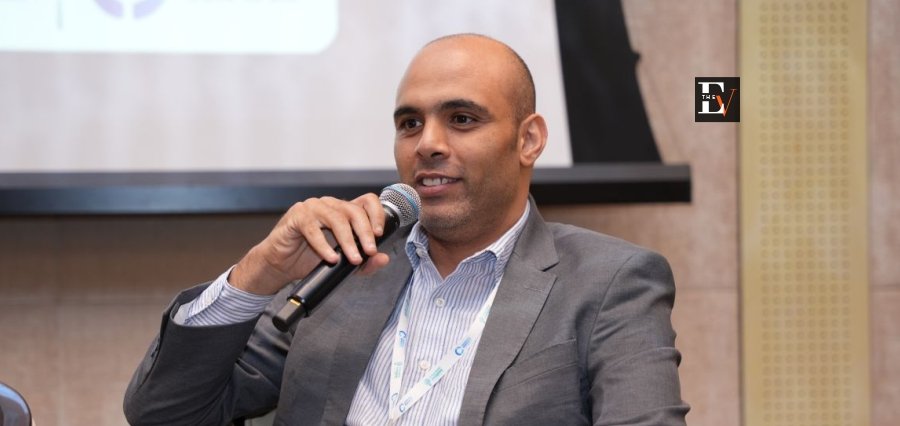
Hisham Elsaied, Managing Partner at High Breed, journey reflects a strong commitment to building people, strengthening workplace culture, and delivering learning experiences that create real impact. Through his work in leadership development, coaching, and learning design, enabling professionals and organizations to build capability, strengthen leadership, and achieve lasting impact in an ever-evolving world.
A Leadership Journey Shaped by Human Development
Every journey into leadership is often guided by a deeper belief in human potential and growth. Hisham’s journey into education and leadership development was shaped by a simple belief: people grow when they are given the right space, the right challenge, and the right support. He started his career in corporate HR and people development, working across different industries and cultures. Over time, he noticed that the biggest difference between average and excellent organizations was rarely strategy alone. It was the quality of leadership, learning, and human development.
That realization inspired him to move deeper into coaching, facilitation, and leadership education. He wanted to help professionals, managers, and leaders not only learn new concepts, but also reflect, shift their mindset, and apply learning in real situations. For him, “shaping excellence is not only about academic knowledge; it is about building confidence, judgment, emotional intelligence, cultural awareness, and the ability to lead others with clarity and responsibility.”
He believes an education leader should create an environment where people feel respected, challenged, and supported. Learning should not be limited to information transfer. It should create transformation. His approach is to connect learning with real business, personal, and societal outcomes. Whether he is designing a leadership program, coaching a professional, or facilitating a senior workshop, he always asks: “What should change after this experience?” If the learning does not create better decisions, better conversations, or better leadership behaviour, then it has not gone deep enough.
Leading in the UAE with Clarity and Inclusion
Hisham describes his leadership philosophy as based on clarity, trust, inclusion, and practical impact. In the UAE, he operates in a uniquely diverse and ambitious environment. People come from different nationalities, cultures, languages, and professional backgrounds, so leadership cannot be one-dimensional. It must be culturally intelligent, emotionally aware, and future focused.
This philosophy reflects the reality of education leadership in the region, where institutions must serve diverse communities while remaining aligned with high standards and future-ready learning outcomes.
Building a Strong Learning Culture Through Relevance and Safety
In his role, Hisham believes the first responsibility of an education leader is to make learning relevant. Adults do not learn deeply when content feels theoretical or disconnected from their daily challenges. A strong learning culture is built when people can see the direct connection between what they learn and how they lead, communicate, solve problems, and influence others.
The second responsibility is psychological safety. People need to feel safe enough to ask questions, admit gaps, challenge assumptions, and reflect honestly. Without that, learning becomes performative.
The third responsibility is consistency. A learning culture is not built through one workshop or one event. It requires continuous reflection, feedback, coaching, and application. Finally, he believes an education leader must model learning personally. If leaders are not curious, humble, and open to feedback, they cannot expect others to be. “Culture is not built by slogans; it is built by repeated behaviors.”
Innovation that Strengthens Curriculum and Learning Outcomes
With innovation and digital learning becoming essential, Hisham believes innovation should serve learning, not distract from it. Technology is powerful, but only when it enhances engagement, reflection, accessibility, and application. In his work, he uses digital tools such as interactive polling, simulations, AI-supported exercises, virtual collaboration tools, and blended learning approaches to make learning more active and practical.
At the curriculum level, he constantly updates content to reflect the realities leaders are facing today: AI readiness, uncertainty, cross-cultural collaboration, emotional intelligence, stakeholder influence, decision-making, and leadership agility. The world is changing quickly, so leadership education must also evolve.
However, he does not believe in using technology for the sake of appearing modern. The key question is always: does this tool help people think better, discuss better, or apply better? The future of learning is not simply digital. It is human-centered, technology-enabled, and outcome-driven.
Navigating Challenges in a Changing Education Sector
The education sector is continuously evolving, and Hisham has faced major challenges that have shaped his approach. One of the biggest challenges has been helping people learn in environments of uncertainty and constant change. Leaders today are dealing with rapid technology shifts, geopolitical complexity, economic pressure, hybrid work, and changing employee expectations. Traditional leadership models are no longer enough.
Another challenge has been shifting learning from passive attendance to real behavioral change. Many organizations invest in training, but the real question is whether learning is applied after the session ends. This has shaped his approach significantly. He now designs learning experiences with application, reflection, peer learning, coaching, and measurement in mind.
He has also learned that every audience is different. What works with one group may not work with another. This has made him more flexible, more curious, and more committed to contextualizing learning rather than delivering generic content.
Achievements Defined by Transformation, Not Titles
Over the course of his career, Hisham shares that the most meaningful achievements are not always titles or certificates, although he is grateful for those. Becoming a Fellow of the CIPD, earning coaching credentials, becoming certified in cultural intelligence and psychometric tools, and contributing to respected platforms have all been important milestones.
However, the moments that stay with him most are when participants tell him that a program helped them see themselves differently, handle a difficult conversation, lead with more confidence, or make a clearer career decision. That is where the real value of education appears.
He has also been fortunate to work with government, semi-government, and multinational organizations across the region, supporting leadership development, cultural intelligence, coaching, and people capability initiatives. These experiences have reinforced his belief that education is one of the most powerful tools for individual and organizational transformation.
Maintaining Balance Through Sustainability and Self-Awareness
Managing a leadership role in education can be demanding, and Hisham maintains work-life balance by approaching it with realism rather than perfection. There are seasons when work is intense, especially during major programs, client delivery, or design deadlines. But he has learned that sustainability matters. If you are in the business of developing people, you cannot ignore your own energy, health, and presence.
He maintains balance by creating boundaries where possible, spending meaningful time with his family, cycling, reflecting, and making space for learning. He also reminds himself that rest is not a reward after burnout; it is part of doing high-quality work.
As a coach and facilitator, his presence is one of his most important tools. If he is mentally exhausted or disconnected, he cannot serve people well. So, balance is not only personal; it is professional responsibility.
Advice to Future Education Leaders in the UAE
Hisham’s advice to aspiring educators and school leaders who wish to build a strong career in the UAE education sector is to stay deeply human while becoming future-ready. The UAE education sector is ambitious, diverse, and fast-moving. To succeed here, educators and leaders need more than technical expertise. They need cultural intelligence, adaptability, emotional maturity, and a strong commitment to continuous learning.
He also encourages aspiring leaders not to chase titles too early. Focus first on credibility, consistency, and contribution. Build your ability to understand learners, design meaningful experiences, communicate clearly, and lead diverse teams.
Another important piece of advice is to remain curious. “The best educators are not those who believe they know everything. They are the ones who keep learning, questioning, observing, and improving.” In a country like the UAE, where the future is being actively shaped, educators have a powerful opportunity to contribute to national growth and human development.
A Vision for the Future of Education in the UAE
Looking ahead, Hisham’s vision for the future of education in the UAE is one where learning becomes more personalized, practical, inclusive, and connected to real-world impact. The UAE has already positioned itself as a hub for innovation, talent, and global collaboration. Education must continue to support that ambition by preparing people not only with knowledge, but with judgment, creativity, resilience, and leadership capability.
He believes the future will require a stronger integration of human skills and digital skills. AI, data, and technology will transform how we learn, but human qualities such as empathy, ethics, cultural understanding, and critical thinking will become even more important.
His personal goal is to continue developing leaders who can navigate complexity with confidence and humanity. He wants to contribute to learning experiences that are practical, memorable, and transformational. Experiences that help people lead themselves, their teams, and their organizations with greater clarity and purpose.
At its core, Hisham Elsaied’s philosophy remains rooted in a simple yet profound belief. As he reflects, “education should never be seen only as a system, curriculum, or qualification. At its best, education is an act of belief in human potential.”. Whether working with students, teachers, managers, or senior leaders, the purpose is the same: to help people see more clearly, grow more intentionally, and contribute more meaningfully to the world around them.