Prime Highlights-
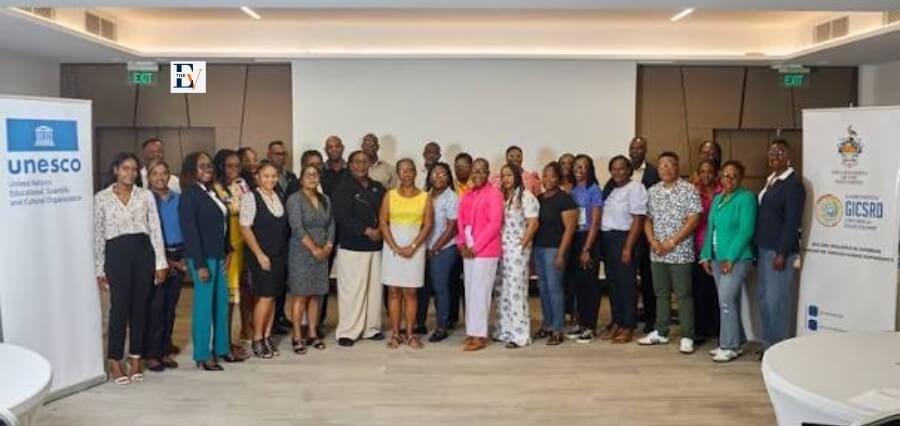
- Workshop draws 34 participants from Dominica, Grenada, Guyana, St Lucia and St Vincent and the Grenadines.
- Program includes a field visit to the Mirabeau Agriculture Station and hands-on action research planning.
Key Facts
- UNESCO holds regional workshop in Grenada to boost climate-resilient, sustainable education across the Caribbean.
- UNESCO to issue a regional guidance note and hold an online follow-up convening later this year.
Background
UNESCO partnered with the University of the West Indies, backed by the Grenada National Commission for UNESCO, to bring educators and education officials from five Caribbean nations together in Grenada for a regional capacity-building workshop.
The gathering focused on weaving Education for Sustainable Development, Climate Change Education and Disaster Risk Reduction more deeply into education systems across the region.
Run under the Climate Smart Education Systems Initiative, the workshop drew 34 participants representing Dominica, Grenada, Guyana, St Lucia, and St Vincent and the Grenadines.
Organizers designed the session to sharpen participants’ understanding and ability to build these interconnected themes into school, classroom and system-wide practice, using approaches tailored to local Caribbean realities.
Sessions covered ways to fold sustainability, climate change and disaster risk reduction into everyday teaching, teacher training and ongoing professional development.
Facilitators pointed out that Caribbean nations face this challenge more acutely, given their frequent exposure to environmental and climate pressures that call for education systems designed around resilience and adaptation.
Attendees worked through stimulus materials, expert talks and hands-on exercises geared toward building inclusive, transformative classrooms.
They mapped out challenges and openings for curriculum integration, mapped strategies to speed things along, and started sketching practical projects fit for their home countries.
The agenda paired classroom theory with direct experience, running creative group work, reflection sessions, a visit to the Mirabeau Agriculture Station in Grenada, and planning for action research. Organizers built these pieces to help educators craft locally grounded solutions that keep working long after the workshop wraps up.
UNESCO now plans to pull the workshop’s findings into a regional guidance note and offer continued technical backing to the ministries and institutions involved.
Those findings will also shape upcoming regional resilience programs, keeping efforts running and scalable. Later this year, an online session will let participating countries compare notes and check progress on their action plans.
Building on this partnership, UNESCO and its collaborators want Caribbean education systems better equipped to turn climate and environmental pressures into openings for education that is more resilient, sustainable and inclusive.