Prime Highlights :
- Professor Patrick McGurk stressed that management and leadership skills hold enduring importance across all sectors, regardless of technological change.
- Selda Ziya said talent exists everywhere but opportunity does not, calling for stronger links between education, communities and employers.
Key Facts :
- The I-LEAD Conference was held at King’s Business School, bringing together educators, researchers, industry leaders and students.
- The closing plenary panel was chaired by Benjamin Stevenin, former Director of Business School Solutions and Partnerships at Times Higher Education.
Background :
Scholars, business leaders and policy makers came together at King’s Business School to attend the I-LEAD Conference where researchers, business leaders and students examined the future of business, management and economics education.
These include topics such as Artificial Intelligence, digital literacy, belongingness, experiential learning, evolving employer needs and others that address issues faced by higher education institutions. Participants at the conference engaged in sessions on the possibilities of rethinking business education in light of new technologies, new student needs and complexities of the current global world. Sessions included human-centred artificial intelligence, partnership pedagogy, future-oriented learning ecosystems, authentic assessments and inclusive curriculum design.
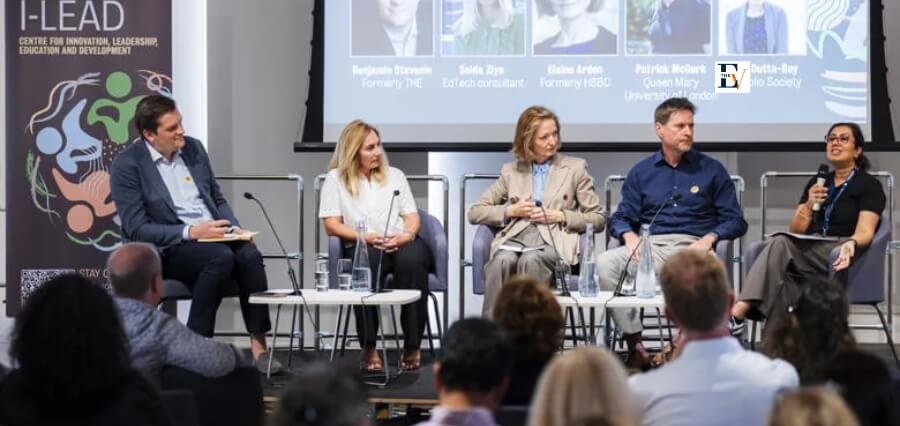
The event concluded with a plenary panel titled “Rethinking Relevance: Does Business Education Still Matter?”, chaired by Benjamin Stevenin, former Director of Business School Solutions and Partnerships at Times Higher Education. Panellists included EdTech consultant Selda Ziya, Queen Mary University of London professor Patrick McGurk, Folio Society CFO Urmi Dutta-Roy, and former HSBC Chief Human Resources Officer Elaine Arden.
Panellists agreed business education remained highly relevant but said institutions needed to keep adapting. McGurk stressed that management and leadership skills held enduring importance across all sectors. Speakers kept stressing the need to go beyond just knowledge transfer and more towards critical thinking, judgment, and adaptability. They also mentioned that graduates have to figure out how to navigate ambiguity and then collaborate across disciplines.
Ziya highlighted the gap between educational achievement and employment outcomes in Tower Hamlets, stating that talent existed everywhere even though opportunity did not, and called for stronger links between education, communities and employers.
The conference closed with a poster reception and networking event showcasing teaching and learning projects from across the sector.