Scaling Influence
Concepts of how human beings learn, work, and live are transforming education across continents. Schools, universities, and training systems are steadily moving away from narrow, exam-heavy models toward approaches that value skills, adaptability and lifelong growth. In this worldwide shift, governments, institutions, and education consulting specialists are working together to redesign systems that are more inclusive, digital, and responsive to real needs.
New thinking about what to learn
The simplest question of educators today is not only how to teach, but what knowledge truly matters for the future. Modern curricula now stretch far beyond memorization. Students are promoted to develop critical thinking, creativity, communication, and collaboration. The classroom learning is increasingly being linked with real-world issues so that knowledge does not stay trapped in textbooks.
There is also growing emphasis on values and global citizenship. Sustainability, digital responsibility, diversity, and empathy are being introduced into everyday lessons. Many systems rely on research, international comparisons, and the insight of education consulting specialists to align local traditions with global expectations.
Shifts in how learning happens
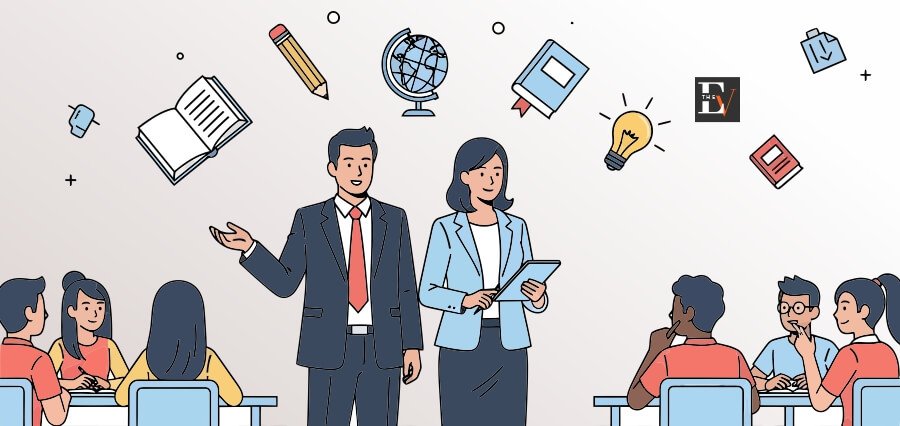
Teaching itself is undergoing a quiet revolution. Instead of long lectures, classrooms are becoming more interactive and learner-driven. Project-based tasks, inquiry learning, and team activities allow students to explore topics in depth and develop confidence in expressing ideas.
Assessment is also evolving. Portfolios, presentations, and continual feedback are now added to the traditional exams. These tools will provide a broader picture of what a learner can do, including creativity and problem-solving, not just their ability to perform under pressure.
Technology as a global connector
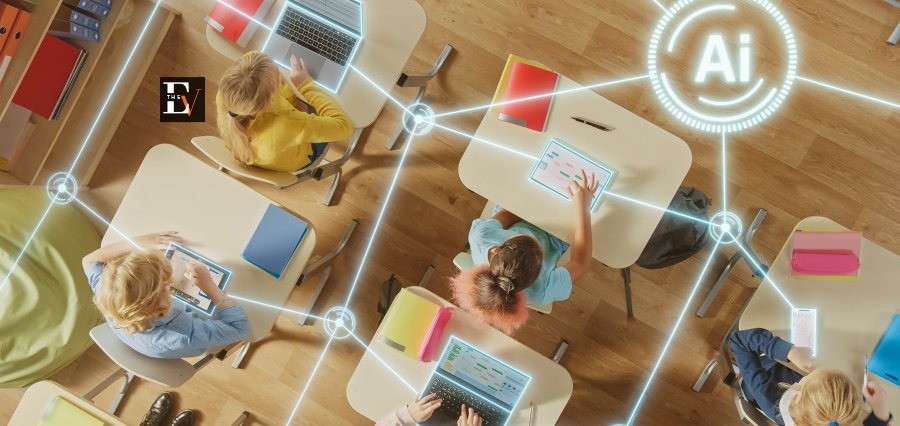
Digital technology has become a bridge that connects classrooms across borders. Online platforms and virtual learning environments allow students to attend courses offered by institutions thousands of kilometres away. Learning is no longer limited by geography or fixed schedules.
Yet technology also exposes inequalities. Most of the areas are still experiencing shortages of devices, internet access, and digital skills. Closing these gaps requires thoughtful planning. Governments and organizations often work with education consulting specialists to develop infrastructure planning and teacher training policies that would make technology beneficial to every student.
Personalization and lifelong learning
Another idea reshaping education is personalization. Rather than having a uniform approach to all learners, systems are developing open channels that cater to individual pace, interest, and ambition. Adaptive tools and data insights allow educators to tailor support more effectively.
Alongside this, lifelong learning has become a necessity. Adults have to re-skill many times due to the rapid change in professions. Short courses, micro-credentials, and online certifications are now common, supported by institutions and education consulting specialists who help design practical models for adult education.
Equity and inclusion on the global agenda
Across the world, there is growing recognition that quality education must reach every learner. Efforts focus on closing gaps linked to gender, income, location, disability, and language. Scholarships, meal programs, digital access schemes, and community outreach are being used to draw marginalized learners into the system.
In many countries, education consulting specialists assist governments in establishing systems that monitor equity measures and ensure resources reach those who need them most.
Reimagining the role of teachers
While tools and policies evolve, teachers remain central to change. Their contribution, which used to be the delivery of content, is growing to guiding thinking, mentoring character, and designing learning experiences. This shift requires new kinds of professional development.
Teacher learning is becoming continuous and collaborative through mentoring, peer observation, and professional communities. Many systems partner with education consulting specialists to build training programs that strengthen digital competence and inclusive practice.
Global partnerships and policy innovation
Education reform is increasingly shaped by global cooperation. International research is studied by the countries, policy lessons are shared, and their ideas are adapted instead of being replicated. Partnerships between governments, universities, industries, and civil groups enhance innovation and lower the expensive errors of failure.
New models of credentials and careers
Degrees are no longer the only signal of readiness. Short, stackable credentials allow learners to build qualifications gradually. Skills, portfolios, and practical experience, in addition to the certificates, are increasingly valued by employers, creating stronger links between education and the labour market.
Summary
Globally, education is being reshaped by powerful ideas about equity, technology, skills, and human development. These ideas are moving from theory into practice through reforms in curriculum, assessment, teacher development, and digital strategy. Governments, institutions, communities, and education consulting specialists are working together to design systems that are more flexible, fair, and future-ready.
The core message of this transformation is clear: learning must prepare people not only to pass exams but to live well, adapt, and contribute meaningfully to society.